Showing posts with label Rob Bell. Show all posts

Friday, February 05, 2010

A Short Critique of Emergent Heresy of Tim King That "Oozes" Forth

One should read this update/caveat to these posts for the whole story.

(For More Discussion, See: Emergents Claim We Don't Need to Convert People to Christianity)


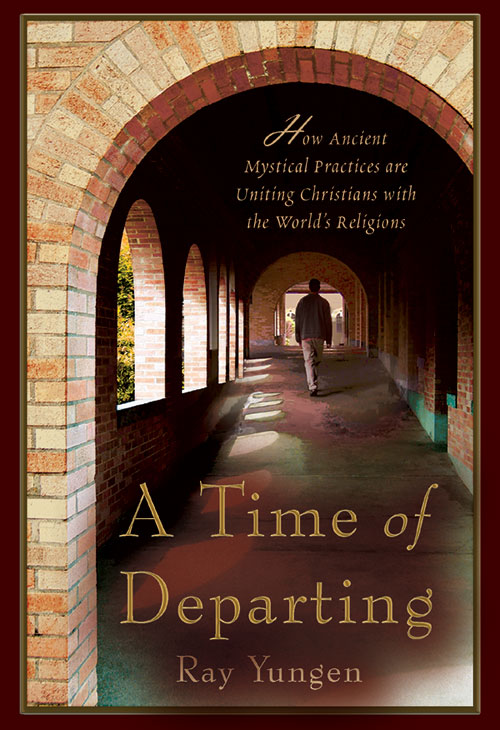
It is interesting that they come out of the shoot with eschatology. This is one of the big ones for emergents. In this video, Tim King talks about "ego" and marrying it to theology. I would agree, however, the ego is placing man as a "co-creator" of this "kingdom-now" theology. For instance, in a book I read on the subject (The Emergent Church, by Bob DeWaay; and/or A Time of Departing: How Ancient Mystical Practices are Uniting Christians with the World Religions, by Ray Yungen) they quoted in part from another heretical book entitled, A Is for Abductive: The Language of the Emerging Church. In it we find this brash definition which I impart to the reader in its entirety from my copy: 
E is for Eschaton
The end of entropy.
In the postmodern matrix there is a good chance that the world will reverse its chronological polarity for us. Instead of being bound to the past by chains of cause and effect, we will feel ourselves being pulled into the future by the magnet of God's will, God's dream, God's desire. This magnetic "future-natural" orientation differs wildly from the mechanistic modern view of the world set in motion by a Prime Mover who made and wound up the clock long ago and ever since has let it unwind naturally, occasionally intervening with a small correction.
This new vision sees the universe as only partially created, an unfinished symphony, a masterpiece in progress. In this eschatology we are invited to be part of God's creative team working to see God's dream for the universe come true (in other words, working to see God's will be done on earth as in heaven). In this way our relationship with God is more than interactive; it is collaborative. It is more than just a matter of God interacting with us; it is a matter of God inviting us to be creative partners (subcontractors, if you will) in the construction of a world as it could be from the world as it is so far.
In the new eschatology, modern charts, bizarre predictions (a tired and tiring game for anyone who knows church history), and apocalyptic novels pretending to something more than purely fictional status will be left behind. (See Hope.)
As people who are being pulled toward an "all-things-new" world to come, we bear the fresh scent of the approaching spring, not the stale cologne of the fading winter.
  • Leonard Sweet, Brian D. McLaren, and Jerry Haselmayer, A Is for Abductive: The Language of the Emerging Church (Grand Rapids, MI: Zondervan, 2003), cf. Eschaton, 113-114.
Yes, you read that right, they think they can stop entropy. I do not have the time or will to explain all that is above (get Bob Dewaay's book if you want to see a more in-depth overview of this topic), however, much of the home-church movement and the rash of videos put out about home church movements believe the above in a "postmodern matrix." I consider it a miracle in my mind's eye that God, for the entire history of mankind, has made Himself eminent and coming. We are to be like the servant who watches for the return of his master (Luke 12:30). The Apostles did it, the Church Fathers acted like it, the Reformers knew it, I practice it. Again, it is truly a miracle that God puts on man's heart the idea that the end is near and that man's life is not in control by himself, that something outside of man truly controls it (James 4:13-15).
The men in the video raise themselves up to the level of God and live in their "creative" moment rather than give to God what is God's because they are giving all to Caesar. Which brings me to world religions, another aspect of this "new" movement that is all the rage.
Popular books such as the Ragamuffin Gospel, Celebrating Discipline, Velvet Elvis, Irresistible Revolution (see my critique), or DVDs like Be Still -- you have these "contemplative stars" up and coming that mention that these various beliefs share a grand-story. Many of these books mentioned promote the idea that salvation can be found in these other constructs. I had one pastor drop off an armful of books to me (yes, I said a pastor), some of them being the above, and if you take them as a whole, you get the following:
1.     that the first three miracles in John were inserted by writers to “woo in pagans,” as they are themselves adopted from pagan stories (so John lied to save souls... the "greater good" thing, or, the church at a later date corrupted Scripture in order to save souls, so which parts of Scripture are not corrupted?);
2.     the Virgin Birth was also a deep seated fear of sexuality and not really a miracle;
3.     books that teach that penal substitution as a vile doctrine;
4.     that Hell is not a place for persons to be placed after a future judgment, and that Hell is actually here now and that we must bring in God’s Kingdom (separate from that future judgment);
5.     these books say we do not have the Gospel right yet;
6.     they teach that travelling to Buddhist temples and practicing meditative techniques in these temples is Christian;
7.     they show that many of the practices rejected by the Reformers are in fact useful to the Christian;
8.     they show that Yoga can make one closer to God and to realize and experience the “divine;”
9.    they teach that the doctrines of the Trinity, nature of Christ, nature of Scripture, and the nature of marriage are “still on the table,” doctrinally;
10.  teach that Paul was really communicating Platonism and not bringing us Scripture;
11.  on-and-on.

If that is not an attack on the essentials, then I don't know what is. In The Ragamuffin Gospel for instance, the author, Brennan Manning recommends or practices the following:
1.       that he attends Mass regularly,
2.       that he believes it is wrong for churches to require that homosexuals repent before they can be members,
3.       that he promotes the use of mantras to create a thoughtless state of silent meditation,
4.       that he spent six months in isolation in a cave and spends eight days each year in silent retreat under the direction of a Dominican nun,
5.       that he promotes the dangerous practice of visualization,
6.       that he quotes very approvingly from New Agers such as Beatrice Bruteau (who says, “We have realized ourselves as the Self that says only I AM ... unlimited, absolute I AM”) and Matthew Fox (who says all religions lead to the same God),
7.       and that he believes in universal salvation, that everyone including Hitler will go to heaven.

(I must quickly note that I do not believe that Catholics are not saved  or damned for merely being Catholic. A Catholic is saved by whom he or she believes Christ is in comparison to say, the co-redemptrix or co-mediatrix of the Virgin Mary. That being said, what the emergent's are doing is rejecting what the Reformation stood for and relegating our "protests" - where we get Protestant from - to a non-essential in their "postmodern matrix." Catholics have a similar "kingdom now" theology that infects their theology and places the Church as a body politic into a very ego-centered co-creator mode where the church will, in one sense, reverse entropy as they do not have a proper understanding of Daniel's last week, as do the Word of Faith movement. // I must also point out that for a church that has its people studying Beth Moore, this is a great opportunity to deal with her unhealthy view of generational sin and taking Scripture out of its intended historical, theological expression and personalizing it or twisting it to the degree she does. I know, opening your Bible a few more times is sooo horrible [17:10-15])  
In her book When Godly People Do Ungodly Things (2002), Beth Moore recommends contemplative Roman Catholic Brennan Manning, to wit., she says of Manning that his contribution to our generation “may be a gift without parallel” (p. 72) and calls Ragamuffin Gospel “one of the most remarkable books” (p. 290). So one can see how close to home this entire movement is hitting. I laughed when the interviewer brought up Thomas Merton! Here I must post a portion of my chapter for a proposed book on the subject, enjoy:

==================================================
In a November 2004 Christianity Today article written by Andy Crouch, titled “Emergent Mystique,” Bell said, “We’re rediscovering Christianity as an Eastern religion, as a way of life” (emphasis added). Thomas Merton, a Catholic monk, predated Bell in his popularizing of interspirituality by “[opening] the door for Christians to explore other traditions, notably Taoism (Chinese witchcraft), Hinduism and Buddhism.”[1] In fact, Merton said that he saw “no contradiction between Buddhism and Christianity,” saying that he intended “to become as good a Buddhist as [he] can.”[2], [3] It seems at first glance that the emergent movement is missing a theological focal point. Unfortunately, Brian McLaren does not believe that we, as a church body politic, have even reached a consensus of what orthodoxy is.


In that same Christianity Today article, Brian McLaren is quoted as saying that he does not “think we’ve got the gospel right yet.... I don’t think the liberals have it right.[4] But I don’t think we have it right either. None of us has arrived at orthodoxy.”[5], [6] Agreeing apparently with Brian McLaren that we have yet to get the gospel right is David G. Benner, who says that the “spiritual climate is ripe... [for]... Jesus seekers across the world are being prepared to abandon the old way of the written code for the new way of the Spirit. Paul told us long ago we've been freed by the gospel to live a new way, but we've not known what it is or how to do it.”[7] McLaren says we do not have the Gospel right yet... Benner says we do not have it right either, yet, we should look to Eastern mysticism to get it correct? I don’t think so. Not only do these authors deny that the Gospel has been known or lived in the past, they teach that orthodoxy has yet to be formulated. Yet in a self-refuting manner they seem to accept universalism as an orthodox doctrine. Universalism is the idea that every “act of worship is accepted by the divine regardless of the theological cloak in which it is hidden[,] since all persons posses divinity within, all deserve the love of the Supreme.”[8] This universalism is pointed out in an excellent book entitled, Reforming or Conforming? Post-Conservative Evangelicals and the Emerging Church:[9]

The gospel, according to the emergent thinkers, is not about individual conversation. It is not about how people get “in.” It is about “how the world will be saved from human sin and all that goes with it....”[10] This sounds close to the mark until we examine more thoroughly what is meant by the terminology. Their concept of “world” does not simply involve humans who don’t believe in Christ. The emergent gospel is not just bringing unbelievers to the Savior for the forgiveness of sin and the imputation of God’s righteousness. There is more, as Rob Bell informs us:
Salvation is the entire universe being brought back into harmony with is maker. This has huge implications for how people present the message of Jesus. Yes, Jesus can come into our hearts. But we can join a movement that is as wide and as big as the universe itself. Rocks and trees and birds and swamps and ecosystems. God’s desire is to restore all of it.[11], [12]

McLaren continues the thought: “Is getting individual souls into heaven the focal point of the gospel?” I’d have to say no, for any number of reasons. Don’t you think that God is concerned about saving the whole world?... It is the redemption of the world, the stars, the animals, the planets, the whole show.”[13] According to McLaren, “The church exists for the world - to be God’s catalyst so that the world can receive and enter God’s kingdom more and more.”[14]

When asked to define the gospel, Neo (the main philosophical character in McLaren’s novels) replies that it could not be reduced to a little formula, other than “the Kingdom of God is at hand.”[15] Narrowing this definition is not easy, but McLaren gives some insight when he writes,
I am a Christian because I believe that, in all these ways, Jesus is saving the world. By the “world” I mean planet Earth and all life on it, because left to ourselves, un-judged, un-forgiven, and un-taught, we will certainly destroy this planet and its residents.[16]

In Doug Pagitt and Tony Jones’ book, The Emergent Manifesto of Hope, we find an emphasis on this universalism:
In summary, we give the following statement of our understanding about the widening scope of salvation:
Not only soul, whole body!

Not only whole body, all of the faithful community!

Not only all of the faithful community, all of humanity!

Not only all of humanity, all of God's creation![17]

In order to accomplish their understanding of the above, much must change in Christian theology, are these emergent leaders up for the task? It seems so:
And as a part of this tradition, I embrace the need to keep painting, to keep reforming. By this I do not mean cosmetic, superficial changes like better lights and music, sharper graphics, and new methods with easy-to-follow steps. I mean theology: the beliefs about God, Jesus, the Bible, salvation, the future. We must keep reforming the way the Christian faith is defined, lived, and explained.[18]

Brian McLaren declares his allegiance to this change as well:
...believing that our message and methodology have changed, do change, and must change if we are faithful to the ongoing and unchanging mission of Jesus Christ. In other words, I believe that we must be always reforming, not because we've got it wrong and we're closer and closer to finally “getting it right,” but because our mission is ongoing and our context is dynamic. From this viewpoint “getting it right” is beside the point; the point is “being and doing good” as followers of Jesus in our unique time and place, fitting in with the ongoing story of God's saving love for planet Earth.[19]  

Similarly, at a 2004 seminar entitled, “A New Theology for a New World,” at the Emergent Convention
in San Diego, Tony Jones said:
We do not think this is about changing your worship service. We do not think this is about... how you structure your church staff. This is actually about changing theology. This is about our belief that theology changes. It’s not just the method that changes.[20]
++++++++++++++++++++++++++++++++++++++++++++++

[1] Wayne Teasdale, The Mystic Heart: Discovering a Universal Spirituality in the World’s Religions (Novato, CA: New World Library, 1999), 39.
[2] Patrick Hart, ed., Thomas Merton Monk: A Monastic Tribute (Collegeville, MN: Cistercian Publications, 2005), 88. Full quote:
There were so many points of contact with Zen Buddhist teaching in all this that I couldn't help asking whether he thought he could have conic to these insights if he had never come across Zen. "I'm not sure," he answered pensively, "but I don't think so. I see no contradiction between Buddhism and Christianity. The future of Zen is in the Nest. I intend to become as good a Buddhist as I can."
[3] “New Agers ‘see themselves as advanced in consciousness, rejecting Judeo-Christian values and the Bible in favor of Oriental philosophies and religion.’ Walter Martin, The New Age Cult,” Mark Water, World Religions Made Simple: Tough Questions, Clear Answers (Chattanooga, TN: AMG Publishers, 2002), 173.
[4] While these authors and pastors try not to be labeled as “liberal,” that is exactly what they are. In an interview with Rob Bell (audio of which can be found at Fighting for the Faith... right around forty minutes into the program) where he is praising the TNIV -- a gender neutered Bible -- Rob himself says he is in the middle of the progressive movement: “My name is Rob Bell, I’m a pastor in Grand Rapids Michigan, the epicenter of progressive culture.”

This can also be found as well under iTunes free podcasts under Fighting for the Faith, dated at 9-1-09, the podcast is titled, “What is Rob Bell Going To Do Now That The TNIV is Going to Be Discontinued?” One of the founders of the emergent movement, Mark Driscoll notes as much as well:
Emergent liberals range from those on the theological fringe of orthodoxy to those caught up in heresy that critiques key evangelical doctrines, such as the Bible as authoritative divine revelation; God as Trinity; the sinfulness of human nature; the deity of Jesus Christ; Jesus' death in our place to pay the penalty for our sins on the cross; the exclusivity of Jesus for salvation; the sinfulness of homosexuality and other sex outside of heterosexual marriage; and the conscious, eternal torments of hell. Some emerging house churches are also emergent liberal in their doctrine. Emergent liberals are networked by organizations such as the Emergent Village, which is led by author and theologian Tony Jones (Jones is no longer a youth pastor but is involved at Doug Pagitt's church), along with other prominent emergent leaders such as Pagitt, Karen Ward, and Tim Keel. The most visible emergent liberal leaders are Brian McLaren and Rob Bell. Emergent liberals are commonly critiqued as those who are merely recycling the liberal doctrinal debates of a previous generation without seeing significant conversion growth; they are merely gathering disgruntled Christians and people intrigued by false doctrine. Albert Mohler, president of the Southern Baptist Theological Seminary, offers this critique:
  • When it comes to issues such as the exclusivity of the gospel, the identity of Jesus Christ as both fully human and fully divine, the authoritative character of Scripture as written revelation, and the clear teachings of Scripture concerning issues such as homosexuality, this [emergent liberal] movement simply refuses to answer the questions."
Religion Saves + Nine Other Misconceptions, 217.
[5] Andy Crouch, “Emergent Mystique,” 37-38.
[6] A caveat here: if he does not think liberals have it right, and then says he does not have it right either... is he then saying he is on the conservative side of the issue? If he is on the right, then where does that leave people like D. A. Carson, Millard Erickson, or myself for that matter? I guess I do not fit within what he considers orthodox... maybe we’re “fascists” of sorts?
[7] David G. Benner, Sacred Companions: The Gift of Spiritual Friendship & Direction (Downers Grove, IL: InterVarsity Press, 2002), 9 (emphasis added).
[8] David K. Clark and Norman L. Geisler, Apologetics in the New Age: A Christian Critique of Pantheism (Grand Rapids, MI: Baker Books, 1990), 70-71.
[9] Gary L. W. Johnson and Ronald N. Gleason, (Wheaton, IL: Crossway Books, 2008), 285.
[10] Brian McLaren, The Last Word After That: A Tale of Faith, Doubt, and a New Kind of Christianity (San Francisco, CA: Jossey-Bass, 2005), 69.
[11] Bell, Velvet Elvis, 109-110.
[12] A humorous aside: could you imagine bickering back-and-forth with God if Job co-opted everything God created? As God would point out how small Job was in comparison to His creation, Job would respond, “no, I am part of this wide and big universe, I am not tiny! I am bigger, in fact, than that Behemoth you just showed me.
[13] Brian McLaren, A New Kind of Christian: A Tale of Two Friends on a Spiritual Journey (San Francisco, CA: Jossey-Bass, 2001), 184.
[14] Ibid., 121.
[15] Ibid., 151.
[16] Brian Mclaren, A Generous Orthodoxy (Grand Rapids, MI: Zondervan Publishing House, 2004), 106.
[17] Doug Pagitt and Tony Jones, An Emergent Manifesto of Hope (Grand Rapids, MI: Baker Books, 2007), 82-83 (emphasis added).
[18] Bell, Velvet Elvis, 12 (emphasis added).
[19] McLaren, A Generous Orthodoxy, 214. I should point out that we can never really be good, this humanistic goal is not Biblical.
[20] Charlie H. Campbell, The Emerging Church & the Battle for Truth, DVD (can be found at: www.alwaysbeready.com), 26:50 into the presentation.
==================================================

I guess, upon reviewing the above, if you don't think that there will be a great falling away (2 Thessalonians 2:3), and you believe that doctrine is ever reforming and changing, and that there is no solidity to Christian culture throughout the ages, then you can simply reject all of these critique and say that we are all "heresy hunters," similar to the leaders in the Word Faith movement simply labeling their objectors and therefore not dealing with their arguments. I regret that I can say this, but I had a pastor defend (straight faced) the conservative nature of the following "theologian" when I pointed out that he had said the following: 
...Anyway, my point in all this is that the doctrine of the Trinity is still on the table. Some people, it seems to me, would like for us to no longer debate certain "sacred" doctrines -- the Trinity, the nature of Christ, the nature of scripture, the nature of marriage etc. And these persons tend to get very jumpy when emergent-types discuss these sacrae doctrinae, especially in books and at conferences that are being taped. "This is dangerous," they say.

I say it's dangerous to stop talking about these things, and it leads to a hegemony among those who already control the seminaries, colleges, magazines, radio stations, conferences, publishing houses, and magazines. We will continue to debate such things.

And furthermore, didn't some famous theologian once say, "None of us is truly orthodox"? Who was that, anyway?
(Tony Jones - Theoblogy)
(I am happy to say however, that this pastor is on the road to orthodoxy.) This zeitgeist is behind much of these "teachers," and it is infecting many churches as I speak. Unity in the name of ecumenical progressiveness. I prefer Scripture where we are told in Jude 3 by the Apostle that he "felt [he] had to write and urge you [us] to contend for the faith that was once for all entrusted to the saints." This seems vastly different the the anthropogenic fundamentalism (ego-centric) we find in the emergent thinking. King talks about not "drawing lines" and not feeling like you need to convert the "Sufi, or whatever religion we are dealing with." However, Jesus drew lines in the sand, literally (John 8:1-11), making people turn in apparent shame, not to mention Jesus mentioning that even homes will be split over this "once and for all delivered faith" (Luke 12:49-56). Right after this mentioning of this hyper ecumenism King describes God in a pantheistic way. Pathetic!

Ahhh, King says at the end that they are bringing a "new earth." I didn't listen to the whole video, I listened to a short bit, stopped it, wrote, and then proceeded in this manner. Here at the very end we find this idea of "co-creators" ("little gods" in Word of Faith jingo) bringing a "new earth," or, utopia of sorts, to mankind. And Tim King applies "egoism" to us? Again, as I watch this video series from time-to-time I have a reoccurring feeling that God uses irony (or the persuading demons that the OT and NT talk about), because the "Ooze" seems a fitting name for what "oozes" forth from this video channel.

The Big Three


Thursday, December 24, 2009

Is Rob Bell a Christian? Pirate Christian Radio


The Gospel According to Rob Bell With Critique by Chris Rosebrough (Fighting for the Faith via Christian Pirate Radio) -- 2-hours

Keep in mind the audio starts with Rob Bell talking... following that is Chris Rosebrough from Christian Pirate Radio

Emergent/Emerging


    Tuesday, December 22, 2009

    The Last Straw: Leaving One Church and Finding Another


    One should read this update/caveat to these posts for the whole story.

     One night alone in prayer might make us new men, changed from poverty of soul to spiritual wealth, from trembling to triumphing ~ Charles Haddon Spurgeon

    I asked a few learned people how I should approach this topic.  After reviewing their advice, I decided not to get too in-depth in the reasoning and people behind my leaving one church and joining another.  I must, however, share the final reason (the proverbial “nail in the coffin”) behind my leaving a wonderful church that I attended for nearly 12-years.  During this time of attending my previous church my wife and I were rejoined in our marriage after almost 3-years of separation -- a miracle that only the wonderful shepherding in the pulpit my pastor could achieve via the Holy Spirit.  Until very recently I would have wholeheartedly recommend this church, now I would counsel persons that the type of resources used are dangerous (as I will explain).  That being said, the last straw that caused me to find a new church home was a book being used with the college group gents by one of the pastors.  The book is Irresistible Revolution, by Shane Claiborne (there is a pretty in-depth review here of the book entitled, A Humbled Resistance: An Examination and Response to Shane Claiborne’s “The Irresistible Revolution” and “Jesus for President”).

    I will forgo in-depth examples here on my site of all the cumulative reasoning behind my decision, though, I will link some books I recommend my fellow Christians to become familiar with at the end of this post which will give some hints as to why I left in a broader sense or meaning.  Much like the author (p. 97), I too wore Rage Against the Machine shirts (I think my oldest son still wears some of my old shirts).  Needless to say, I wore Rage Against the Machine shirts with the thought-in-mind that I rejected the class warfare lyrics that this self-admitted Marxist band sung and I engaged with younger minds when they asked about the shirt  about why I rejected their lyrics and ideas behind the music.  Shane wore the shirts of this band with full knowledge of and support for this class warfare idea found only in Marx and Engels manifesto.  I say this only after reading Irresistible Revolution.

    Of course Shane makes the argument that you have to be an atheist to be "officially" a "Marxist."  This is only a small value in Marxism, granted an important one,  however, Marxism is much more than merely a belief in the divine. In fact, the divine is merely transferred to this world in dialectical materialism, and a push for utopia creates the “divine” in man and his anthropogenic fundamentalism... as exemplified in Shane’s writings.  Take note as well that I argue that Mormonism is a form of Dialectical materialism and is closer to atheistic Marxist philosophy than to Christianity.  Last time I checked Mormonism is riddled with "Divine" as is atheistic Buddhism.  Not to mention that the Communists (atheists) used religion:

    A poignant example of this comes from the Bolshevik Revolution.  While this was an atheistic movement with a view of religion as “the opiate of the masses” used by a few powerful people to control said “masses,” the Soviets themselves tried to use religion to “control the masses.”  One early attempt by the Bolshevik Revolution to take over the spiritual was through the Renovated Church (also known as the Living Church Movement) which was meant to reinterpret the teachings of Christ and the Apostles towards a Soviet end.  During one of the short-lived attempts here by the Soviets we find this official “statement of faith:”

    • The Soviet power does not appear as a persecutor of the Church.
    • The Constitution of the Soviet state provides full religious liberty.
    • Church people must not see in the Soviet state a power of the anti-Christ.
    • The Soviet power is the only one which tempts by state methods to realize the ideals of the Kingdom of God.
    • Capitalism is the “great lie” and a “mortal sin.”
    The Soviet government is the world leader toward fraternity, equality, and international peace.
    (Taken from the first chapter to my proposed book, Worldviews: A Click Away from Binary Collisions.  Here is a quote taken from this first chapter from Edgar C. Bundy's book, How the Communists Use Religion [Wheaton, IL: Church League of America, 1966], 12 -- I will put this caveat here; however, it applies to the whole: I will quote authors with whom I do not necessarily agree with.  I often quote authors that are: atheists, pagans, fellow Christians, politicos, homosexuals, evolutionists, and the like… merely because I quote an author, this quotation does not mean that I support their work as a whole.)

    So as I was reading this book, Irresistible Revolution, I stopped at page 34 and went to the appendix after Shane wrote this:
    Who knew you could make so much money writing a book? For the sake of transparency, I want you to know that all the money I get from the sales of this book, both the advance and the royalties, is being given away. This is not a noble act, of charity. It's the only thing that makes sense to me. Besides, this is not just my story, and I am not just exploiting the stories of others. This book has emerged from a movement of communities of faith and struggle, inspired by local revolutions and ordinary radicals, anchored in life among the poor and marginalized. So it is not only a responsibility but a joy and honor to share the profits with all of them.[footnote #3] May we continue to feed each other hope as we dance God's revolution together.
    #3. In appendix 1 at the back of the book, you will find a list of ordinary radicals with whom I enthusiastically redistribute the money I receive from the publication of this book through the Simple Way's Jubilee Fund. (emphasis added to the Marxist/Leninist language)
    I didn’t take much time in this appendix, but I did follow through with a few of the links Shane provided.  This is what I found -- keep in mind that: I underlined and emboldened the main site referenced in Shane’s appendix and then I follow that link with either a quote that represents some positional statement (italicized) of that site, or simply went to that sites "links" section and linked out to whom they recommend themselves.  Although I could have listed many links, I think the few I chose make my point.  I would say enjoy... but...
     
    Alternative Seminary -- http://www.alternativeseminary.net/
    • Liberation theology
    • Feminist theology
    • The Catholic Worker movement
    • Theologies and biblical reflections emerging from the peace movement and faith-based resistance communities
    • Gay and lesbian theology
    • Jewish renewal
    Links Out:
    Jesus Radicals is a web-based community of Christians exploring Christian anarchism and a belief that the Gospel rejects militarism, capitalism and the state and promotes a message of justice and love.
    http://www.jesusradicals.com/

    Atonement Lutheran Church -- http://www.ourchurch.com/

    I am Pastor Maggie Ainslie.  I've been pastor of Atonement Lutheran Church for 9 1/2 years now.  I live 4 blocks away from the church with my husband Matt....

    Brandywine Peace Community -- http://www.brandywinepeace.com/
    For our nation in which money is readily available for warfare and weapons builders, like Lockheed Martin and Boeing, and while the very term security is used synonymously with weapons and military might: not with jobs, universal health care, healthy communities, education, a non-toxic environment, a future, All: We lift up the stones of our arrogance.
     (Their “cost of war” counter on this site is B.S. by the way)


    Catholic Workers -- http://www.catholicworker.org/
    Above all, we need to hear more and more about the doctrine of the Mystical Body of Christ. "We are all members, one of another. Where the health of one member suffers, the health of the entire body is lowered." "An injury to one is an injury to all," the old I.W.W.'s (The Industrial Workers of the World) used to say.
    [...]
    In none of the letters sent to us in protest was there recognition of the fact that the writer, Gonzales, was as much opposed in his own way to the Marxist-Leninist position as we ourselves. His position is that of the anarchist, pleading for the principle of subsidiarity, calling for "secular monasticism," using that expression when speaking to the clergy in order to make them understand the idea of farming communes, or collectives, or cooperative farms.
    Links Out:
    • Noam Chomsky Writings -- http://www.zmag.org/ (self admitted Marxist/atheist)
    • Labor Net -- http://www.labornet.org/ (one of the most extreme union/socialist orgs out there)
    • I.W.W. -- The Industrial Workers of the World - http://www.iww.org/ (a socialist/Marxist organization) 
    Evangelicals for Social Action (ESA) -- http://www.esa-online.org/Display.asp?Page=home
    Economic justice: ESA, on the whole, promotes an economic theory that once would have been called socialism, but which now, on the basis of historical considerations and semantic charity, is usually referred to as “democratic capitalism.” ESA describes itself as “pro-poor,” which means, in practical terms, that government-directed flow of capital is a necessary condition of economic justice. “Economic justice” is itself considered to be more a matter of equal distribution than fair return. Some argue that, over the past few years, Sider has drifted more towards the right. He certainly speaks with approval of “market economies,” but remains, with ESA and its partners, wary of “free market economies.”
    Environmental protection: ESA is the source and current partner of the Evangelical Environmental Network (EEN), which has recently become famous for its “What Would Jesus Drive?” campaign. Basically, ESA’s position on the environment is: (1) The earth’s resources are running out, which entails the need for major lifestyle changes for (primarily) Western nations and (primarily) middle and upper class individuals. (2) The profligacy and abuses of (the rich people in) the West have contributed mightily to the instability of the global environment (e.g., “global warming”); hence, major changes are in order. ....

    Obviously one can see the extreme political nature of this book and how it rejects history for one superimposed by Chomsky and Zinn.  There seems to be a correlation as well to some who may be saved because of their works.  I do not know ultimately if Mother Teresa was truly saved or not... only God knows this... that being said, I can say that if Mother Theresa believed the following...

    Among the all-too-accessible examples that could be cited, consider the following excerpts (chosen because they are representative of the genre, not because they are outstandingly bad) from Novena Prayers in Honor of Our Mother of Perpetual Help, a booklet published by the Sisters of St. Basil with official church approval (Nihil Obstat and Imprimatur):
    Have pity, compassionate Mother, on us and our families; especially in this my necessity (here mention it). Help me, 0 my Mother, in my distress; deliver me from all my ills; or if it be the will of God that I should suffer still longer, grant that I may endure all with love and patience. This grace I expect of thee with confidence, because thou art our Perpetual Help (p. 5).
    We have no greater help,
    no greater hope than you,
    0 Most Pure Virgin; help us, then,
    for we hope in you, we glory in you,
    we are your servants.
    Do not disappoint us (p. 16).
    Come to my aid, dearest Mother, for I recommend myself to thee. In thy hands I place my eternal salvation, and to thee I entrust my soul. Count me among thy most devoted servants; take me under thy protection, and it is enough for me. For, if thou protect me, dear Mother, I fear nothing; not from my sins, because thou wilt obtain for me the pardon of them; nor from the devils, because thou art more powerful than all hell together; not even from Jesus, my Judge, because by one prayer from thee, He will be appeased. But one thing I fear, that in the hour of temptation, I may through negligence fail to have recourse to thee and thus perish miserably. Obtain for me, therefore, the pardon of my sins, love for Jesus, final perseverance, and the grace to have recourse to thee, 0 Mother of Perpetual Help (p. 19).
    Elliot Miller and Keneth R. Samples, The Cult of the Virgin: Catholic Mariology and the Apparitions of Mary (Grand Rapids, MI: Baker Books/Academic, 1992), 57.

    ...No matter what her good works are or would be, this dedication to other than Christ clearly -- according to Scripture -- negates the adherent from salvation.  There is good evidence that this Marion worship was employed in Mother Teresa's faith.  Shane also talks of and quotes Gandhi approvingly, which seems odd.  Odd because Gandhi was a racist and ordered, in racially tainted radio broadcasts, his followers to kill Zulu's (blacks).  Gandhi only used "peaceful" protests with the British because militarily India could not cope with the British and Gandhi was a good politician first and knew where to draw his lines and which strings to pull.

    I wish I could say differently, but the book is just bad from beginning to end and is not a proper resource for a church to use, at least a church that claims conservative Evangelical mores.  Obviously no book is COMPLETELY bad, and there are noble points in it... I mean who wouldn't want to  stamp out poverty worldwide and stop all wars?  How has this worked in real life is what I want to know, and are all the claims Shane makes about war and poverty in the real world accurate and not some make believe candy-land Utopian dream:


    Again, there are noble ideas in the book, they just may not be very realistic, that's all.  On pages  123-124 you find a portion of what Shane's "ministry" does on "an average day":


    "We are about ending poverty, not simply managing it. We give people fish. We teach them to fish. We tear down the walls that have been built up around the fish pond. And we figure out who polluted it. We fight terrorism -- the terrorism within each of us, the terrorism of corporate greed, of American consumerism, of war.... We spend our lives actively resisting everything that destroys life, whether that be terrorism or the war on terrorism. We try to make the world safe, knowing that the world will never be safe as long as millions live in poverty so the few can live as they wish. We believe in another way of life -- the kingdom of God -- which stands in opposition to the principalities, powers, and rulers of this dark world."


    Unfortunately, this "kingdom now theology" that so infects the Word-Faith Movement and the name it and claim it gospel, also infects the eschatology of the extreme theological Left.  Both theologies have the view that Shane enumerates when he encourages us to "take courage, as you will then have more grace as you liberate others" (p. 32).  I am sorry, no person can liberate me, they and I are fallen and cannot liberate even ourselves. A great example of this egalitarianism:


    “When people use the word hell, what do they mean? They mean a place, an event, a situation absent of how God desires things to be. Famine, debt, oppression, Loneliness, despair, death, slaughter — they are all hell on earth. Jesus' desire for his followers is that they live in such a way that they bring heaven to earth.”
    (Rob Bell, Velvet Elvis [Grand Rapids, MI: Zondervan, 2005], 148.)

    Obviously the political and theological tome of this book is very charged, to say the least.  (If you need to understand more of my reasoning, or have questions about this post I will be more than happy to talk to you -- my email is at the top of this site.) Through this process of seeing a great church compromise on its Reformation roots, I have talked to many pastors and visited quite a few churches.  I finally found a new home and a pastor that takes its Reformation history seriously and realizes the divide between Protestantism and other movements.  I know at this new home that future staff members will be vetted a bit more in regards to the faith once and for all delivered unto the saints.  Here ends my short reason why I have left my home of almost 12-years.


    I wish to share a bit more personally here, so forgive my continuing this subject, but it is an important one.  One thing that pained me deeply was the approval of particular authors either through word-of-mouth or pastoral desks adorned with these writers.  Here is one excerpt from one of these authors that gives me pause about the rest of their writings:

    When the boundaries between God-ordained practices and pagan practices are erased, as is the case in the Emergent Church, then it makes sense to find practices that are attractive to people in the surrounding culture. One such practice is Yoga. Although Yoga is a Hindu practice and intimately related to various Hindu deities, some Christians have begun to bring this pagan practice into the Church. Some claim that they have removed any religious content and are merely using Yoga positions for exercise. But this is wrong and dangerous. In the case of Pagitt's church, Solomon's Porch, Yoga clearly is not merely "exercise."
    Pagitt's book, Church Re-imagined, contains a description of the church's weekly yoga class written by the woman who leads it. She states, "We aren't here for a hardcore physical workout as much as the chance to be together, to breathe, to relax, and to bring ourselves to a place of peace and gratitude." The process includes having the students regulate their breathing. They also use different poses each week: "These vary from week to week, but Downward Facing Dog is a must."  The poses and breathing are designed to do something to their inner state: "This [that the chit-chat has stopped] tells me that tension has been released from the muscles, inner chatter has moved out of the brain, and self-awareness and peacefulness have settled in."


    The yoga instructor gives a more detailed description of the last pose:

    Our last pose of the evening is called "savasana"... or corpse pose. The student lies on her back letting the legs fall open as they will, the arms hang limp like empty coat sleeves. The face, the forehead, the space between the eyebrows all relax, and the person melts heavily into the floor. Eyes are closed, breathing is rhythmic. I turn the lights off, and only the glow of candles and sometimes fireplace illuminates the room. This state of being is holy. It is at this time that we become closer to God, aware of our bodies, of the divine.
    Clearly, her claim is that yoga is a means to become holy and draw near to God. A corollary to this claim is that humans have a right to determine their own path to God. The Bible makes it clear that we must come to God on His terms only, not ours! It is one thing to claim the right to use practices of other religions in a non-religious way (which I believe has no place in the church), but it is egregious to claim that practices from pagan religions can make us holy and closer to God.
    Bob Dewaay, The Emergent Church: Undefining Christianity (2009), 128-130 (quote within the quote taken from Pagitt's book Church Re-Imaged).


    You see, when you forgo the plum-line of Scripture and include practice as your truth... problems tend to follow.  


    Here is a slight update, it comes from a friendly exchange between I and one who supports my move, here is my response (I will update conversation here as it appears on my FaceBook):


    ME: Thanks you two. Michele, yes, I know you do... thank you. It wasn't the "big building," it was the book that speaks out against churches like NP:
    1. If we have parishioners who follow the advice in the writings of Brian McLaren, Rob Bell, Shane Claiborne, Doug Pagitt, Tony Jones, and the like (passed on by our pastors in some way), they will leave our church due to its "suburban" nature. (pp. 62, 84, 163 of Shane's book [as examples])
    2. If our parishioners reject the emerging ethos as aberrant, then as they discuss the matter with some of our pastors, they will possibly find a church that takes a firmer stance on this up-and-coming issue within the historic faith.
    Shane is also very antithetical to police (p. 122), anti-military (pp. 95-96, 122-123), and teaches a "kingdom now theology" (pp. 62, 87), calls for overthrowing a particular social order using Marxist/Leninist speak (p. 129), and the like. Pretty wild stuff even beyond the Richard Foster discussion we had.
    [...]
    TRAV:Thomas Watson said it better than I ever could, he said,"Toleration is the grave of reformation. By toleration we adopt other men's sins, and make them our own"...


    ME:Can I tell you that that quote hit the spot, let me explain why. On page 152 of Shane's book we read this: "People are poor not just because of their sins, they are poor because of our sins..." Again, some of what Shane writes is "true." Throughout his book he shifts blame off of the person and their position with their savior and puts the blame on corporations, the rich, the privileged white-person, the police, etc. The class warfare language is immense in this political tome [see video below]. On page 124 he equates poverty with violence ("...knowing the world will never be safe as long as millions live in poverty..."). Newsflash, many of the persons committing the most heinous crimes today (Islamo-Fascists) are rich and have had privileged education. He doesn't make sense.


    Poverty exists mainly because of corrupt governments (mainly revolutionary governments) and often times because of pacifists standing in the way of liberating millions of people by force do they remain in abject poverty (like the UN). So Shane's "sin of pacifism" inflicts more poverty and death on cultures than do the liberating forces that try to let people govern themselves (like in Iraq and Afghanistan).


    After a friend mentioned that this should be handled in a more private manner I mentioned in parts the following:
    ME: Kev, you said, "I think you also know the leadership of NP would NEVER consciously 'promote' this nonsense." I am sorry to inform you to the contrary. Ping-pong and softball at the men's retreat and talking about which NFL team is up that week and giving the shoulder-to-shoulder "dude hugs" may not bring out these topics, but I tend to. Where is the sound exegetic doctrine? This isn't about "giving your testimony" versus "an apologetic," or "pre" and "post" tribulation positions. This is about many in leadership implicitly supporting heretical views and a couple explicitly teaching it. Being "young in their theology" (as told to me during a convo with _________[ info for not here]) means they shouldn't be in the positions they are.

    [....]

    This just isn't a disagreement between brothers, it is many positions in a fine church being filled with people who teach or do not understand what heresy is. The pulpit (the main one, the college groups, or [any other position in any church]) are not places for experimental theology and aberrant Christian beliefs and practices... Rob Bell teaches a different Christ, Richard Foster teaches paganism/occultism, Shane Claiborne teaches Marxist/Leninist ideals and "Revolutionary Christ" (see above), Doug Pagitt teaches post-modern relativistic Gospel, Brian McLaren and psychologist David G. Benner do not think we have gotten the Gospel right yet, Thomas Merton was a Buddhist, Henry Nouwen was a homosexual Catholic /Buddhist mystic. For leaders not to know the dangers of recommending, teaching from, or following such "theology" is not something that needs to be brought before two or three brothers. These are "other than Gospel/Christian" theologies that are being injected into a once fine church by a non-existent vetting process (too much grace, no truth). Its like Obama's Cabinet and tax issues! So my warning may throw some, but as they travel with this church... keywords like Doug Pagitt, Tony Jones, Richard Foster, Shane Claiborne will hopefully be etched in their minds.
    • Here are some books I recommend