Showing posts with label Richard Foster. Show all posts

Thursday, February 25, 2010

Thomas Merton Bio #3

 (See Part I and Part II)


New Age is defined well this way:
         [O]ccultism [New Ageism] is defined as the science of mystical evolution; it is the employment of the hidden (i.e., occult [secret]) mystical faculties of man to discern the hidden reality of nature; i.e., to see God as the all-in-all.[1]
I am very familiar with "freedom," in fact, when Luther wrote his commentary on Romans he was still a bit fresh to the commentary scene. His commentary on Galatians however, fantastic. I also enjoy Augustan, Aquinas, and many other Church Fathers and apologists/theologians, I can even pick through Origin's stuff. Contemplative prayer is not something that should be gleaned/shared or compared to this history. You will see a recurring theme in meditative practices, they are grasped onto by people in the Eastern religions and Roman Catholicism as another way or work to reach God. In other words, the typical Catholic has salvation wrapped up in many legalistic traditions, and it doesn't surprise me that instead of looking to the Reformational doctrines, they look to the East, who are likewise filled with traditions and models to achieve emptiness of the mind. I will contend that the "silence" Merton speaks of is not the "solitude" Jesus sought or the type mentioned in Psalm 46:10, a favorite verse of the contemplatives.
Ken Kaisch, an Episcopal priest and teacher of mystical prayer says in his book Finding God:
         Meditation is a process through which we quiet the mind and the emotions and enter directly into the experience of the Divine.... there is a deep connection between us... God is in each of us.[2]
However, how does one get to this point of realizing "God is in each of us," or, in all things in the panentheistic sense? What does this silence cause? Bishop Alan Jones in Reimaging Christianity, says the church must head towards contemplative prayer,
         ...the life of contemplative prayer... Loved and in communion with all things, the soul is born in and out of the secret silence of God. This silence at the heart of mysticism is not only the meeting point of the great traditions but also where all hearts might meet.... But another ancient strand of Christianity teaches that we are all caught up in the Divine Mystery we call God, that the Spirit is in everyone [not talking about the Imago Dei], and that there are depths of interpretation yet to be plumbed.... At cathedral we "break the bread" for those who follow the path of the Buddha and walk the way of the Hindus.[3]
Here is a longer quote from Bishop Jones from my chapter of a larger paper:
The following quote from is from a book that I had read some quotes from in other works and I just couldn’t believe what I was reading, so I bought it to see for myself.  Here is what I found:
Who's Included?
Imagine a great cathedral in Western Australia packed for the cele­bration of Commonwealth Day. There's been a lot of preparation for the service, and tough questions were asked about what “common­wealth” might mean in such a multicultural society. Who should be included and how should the Church celebrate the present reality that is Australia? What's the relationship of Christianity to the other faiths represented in the Commonwealth?
John Shepherd, the dean of St. George's Cathedral in Perth, Western Australia, invited the abbot of the Bodhinyana Buddhist Monastery to preach at the service, which was a Eucharist -- the central Christian sacrament. The abbot accepted in full knowledge of this. Aboriginal dancers led the procession into the cathedral and later led the offertory procession to the altar. During communion, representatives of the Jewish, Hindu, Muslim, and Baha'i faiths read passages from their sacred writings, and after communion an Abo­riginal reader offered a dream-time reflection. Was this Christian? The answer, as far as I'm concerned, is “Of course.”
For others, however, the service was an act of betrayal. Outside the cathedral two people stood in protest, holding placards bearing biblical texts. One protester briefly interrupted the abbot's address with a cry that they were all heading for hell. The two lone objec­tors believed that the Christian witness was being compromised.   And from their point of view, they were right.  Either Christianity is true or it isn’t.  If it is, the other religions, however well meaning their adherents are, must be false. Right? And it's hypocritical to think and act otherwise.
But another ancient strand of Christianity teaches that we are all caught up in the Divine Mystery we call God, that the Spirit is in everyone, and that there are depths of interpretation yet to be plumbed. “In the beginning was the Word, and the Word was with God, and the Word was God.... What has come into being in him was life, and the life was the light of all people” [John 1:1-18; ital­ics mine].[4]
I believe this idea of integrating faith is self-explanatory.  However, in case you missed it, at the end of the quote Alan Jones inserted an Eastern pantheistic worldview into the Gospel of John.  In other words, in order to validate his point, Jones practiced eisegesis.  (“Exegesis is ‘letting the text speak for itself rather than reading into the text what isn’t there,’ which is eisegesis.”)[5]
In the book the Contemplative Experience, Joseph Chu-Cong speaks about Bernard of Clairvaux:
  • He realized that God permeates the whole of creation. His experience was that God is the "stone in the stones, the tree in the trees," and in the same way, the center point of his own soul. God resides at the heart of all that exists![6]
Thomas Merton went so far as to say that without contemplative prayer "the Church cannot fulfill her mission to transform and save mankind."[7] This is Gospel plus something. Plus what? William Shannon quoting Merton explains what the goal of contemplative practice is:
  • The contemplative experience is neither a union of separate identities nor a fusion of them; on the contrary, separate identities disappear in the All Who is God.[8]
This is New Age Eastern thought. It has its place in the Mind Sciences, not in conservative Protestant bodies. Brennan Manning, author of Ragamuffin Gospel, wrote some suggestions in his Signature of Jesus on how to empty you mind:
  • the first step in faith is to stop thinking about God at the time of prayer.
  • contemplative spirituality tends to emphasize the need for a change in consciousness . . . we must come to see reality differently.
  • Choose a single, sacred word ... repeat the sacred word inwardly, slowly, and often.[9]
This is exactly how Eastern gurus empty their mind. Richard Foster (one of the most well-known Merton disciples) defines it thusly: "Christian meditation is an attempt to empty the mind in order to fill it."[10]
This isn’t about whether one listens to Dio or P.O.D. -- has adopted a stance on predestination, free-will, or nothing at all; it is about necromancy (spirit guides), altered states of consciousness, astral projection, importing pantheistic worldviews into a theistic one, and occultism.  For instance:
Willow Creek's Leadership Summit in August 2006 introduced Jim Collins to the 70,000 participating Christian leaders. Since 1982 he has been a disciple of New Ager Michael Ray. That year Collins took Ray's Creativity in Business course, which “takes much of its inspiration from Eastern philosophy, mysticism and meditation techniques” and promotes tapping into one's inner wisdom. It describes an “inner person” called “your wisdom keeper or spirit guide” that “can be with you in life” (“Willow Creek Leadership Summit Starts Today,” Lighthouse Trails, Aug. 10, 2006). Collins wrote the foreword to Ray's 2005 book The Highest Goal: The Secret that Sustains You in Every Minute, which claims that man is divine and recommends Hindu mind emptying, meditation. The book quotes Hindu gurus Ram Dass, Jiddu Krishnamurti, and Swami Shantananda. Yet Collins calls it “the distillation of years of accumulated wisdom from a great teacher.” Following is a quote from the book:
         I attended a meditation-intensive day at an ashram [Hindu spiritual center] to support a friend. As I sat in meditation in what was for me an unfamiliar environment, I suddenly felt and saw a bolt of lightning shoot up from the base of my spine out the top of my head. It forced me to recognize something great within me ... this awareness of my own divinity (Michael Ray, The Highest Goal, p. 28; the foreword is by Jim Collins; quoted from “Willowcreek Leadership Summit Starts Today,” Aug, 10, 2006, Lighthouse Trails).[11]
Which is why Thomas Keating says in his book Kundalini Energy and Christian Spirituality (a book recommended by Brennan Manning) that,
         In order to guide persons having this experience [divine oneness], Christian spiritual directors may need to dialogue with Eastern teachers in order to get a fuller understanding.[12]
Which may have been the catalyst for Merton saying that he "see[s] no contradiction between Buddhism and Christianity. The future of Zen is in the West. I intend to become as good a Buddhist as I can."[13] Just a reminder on Manning in my "guilt by proxy" post about Beth Moore:
Moore builds her case for contemplative in her frequent references to Brennan Manning in her book, suggesting that his contribution to "our generation of believers may be a gift without parallel" (p. 72). This is indeed a troubling statement made by a Christian leader who so many women look to for direction and instruction in their spiritual lives. Many of those women, in reading Moore's comments about Manning and her quoting of him in the book may turn to the writings of Manning for further insights. When they do, they will find that Manning is a devout admirer of Beatrice Bruteau of The School for Contemplation.
Bruteau believes that God lives in all creation, stating: "We have realized ourselves as the Self that says only I AM, with no predicate following, not 'I am a this' or 'I have that quality.' Only unlimited, absolute I AM" (Lighthouse Trails).
Ahem... this is contemplative prayer, e.g., New Age realizations geared to eradicate self, cause an eastern style silence/emptying of the mind, and deification in some respect of man. This is not found in Biblical history but only the history of panentheism picked up by the traditions that made Luther and Calvin and others sick. Not only was Merton a typical "worship Mary and pray to the saints" Catholic, he was a self-pronounced Buddhist who used Buddhist forms of meditation and repackaged it into Christianese along with the "Desert Fathers" use of the same Eastern practices. In fact he experienced, while meditating in front of Buddha statues deep mystical experiences similar to his contemplation on Christ.
While I agree you can glean stuff from certain theologians, in all that I have read and studied on Merton he would be lumped in with the anti-Christ's religion by the Reformers. Which may be why there is talk about a new reformation or talk of the "old one" being too rigid.
Fuller Seminary professors Eddie Gibbs and Ryan Bolger, in their sympathetic study of the emerging church, say:
         Whereas the Reformation removed many rituals from the worship service, postmodern worship restores these activities. The reformation focused on the spoken word, while postmodern worship embraces the experienced word. Thus, emerging church worshipers may respond with the sign of the cross, more often associated with Catholic worship, and they receive the deep mystical aspects of communion, candles, and incense. They may retrieve ancient rituals and create new ones involving the body; they may dance in different venues" (Emerging Churches, p. 78).
Solomon's Porch in Minneapolis, led by Doug Pagitt, uses labyrinths, celebrates Ash Wednesday by putting ashes on the forehead, practices silent prayer and prayer dancing, makes the sign of the cross, and uses the Stations of the Cross (Church Re-imagined, pp. 86, 101, 102).[14]
The Boston Globe mentions this new monastic mysticism in one of their article:
         There is now a growing movement to revive evangelicalism by reclaiming parts of Roman Catholic tradition--including monasticism. Some 100 groups that describe themselves as both evangelical and monastic have sprung up in North America, according to Rutba House's [Jonathan] Wilson-Hartgrove. Many have appeared within the past five years. Increasing numbers of evangelical congregations have struck up friendships with Catholic monasteries, sending church members to join the monks for spiritual retreats. St. John's Abbey, a Benedictine monastery in Minnesota, now makes a point of including interested evangelicals in its summer Monastic Institute ("The Unexpected Monks," The Boston Globe, Feb. 3, 2008).
If there is any mistake about what the goal of contemplative prayer, Richard Foster sums it up:
         To this question the old writers answer with one voice: union with god. ... Bonaventure, a follower of Saint Francis, says that our final goal is "union with god," which is a pure relationship where we see "nothing."[15]
The "old writers" are old Catholic writers, but the Bible nowhere describes or encourages such a practice. The believer's complete relationship with God is an accomplished fact in Christ.
          As you therefore have received Christ Jesus the Lord, so walk in Him, rooted and built up in Him and established in the faith, as you have been taught, abounding in it with thanksgiving. Beware lest anyone cheat you through philosophy and empty deceit, according to the tradition of men, according to the basic principles of the world, and not according to Christ. For in Him dwells all the fullness of the Godhead bodily; and you are complete in Him, who is the head of all principality and power. (Colossians 2:6-10 NKJV)
I agree with that we need discernment, and can reject parts of peoples writings that we know to be badly slanted (Luther's The Jews and their Lies for example). This is exactly the point... Merton's input on prayer is wrong from the floor up, and we as discerning Christians should consider its rejection, in light of Protestant freedom and relation in Christ. I think all we can glean is that yes, Christian prayer life needs improvement, along with everything else we associate with human-hood. Do we really have to wade through this stuff to get that?

This silence Merton and others speak of, by-the-by, is an emptying of your mind, not solitude.
The question is, since we are called to "prove all things and hold fast to that which is good," have you [the person that has experienced and enjoyed through feelings] tested these practices beyond the feeling that they bring you closer to God or merely hearing about them. The consideration that these practices have been given to us evangelicals via a Roman Catholic Buddhist whom himself received it through a long line of thinking relating to neo-platonic thinking should cause red-flags in our looking into this.


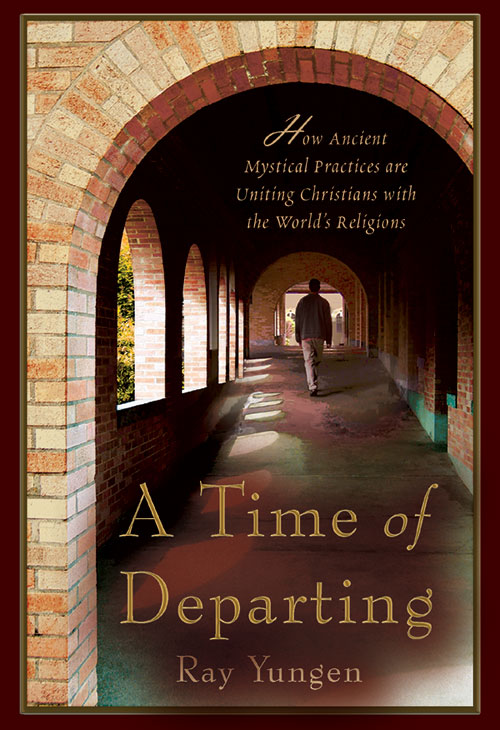
[1] Richard Kirby, The Mission of Mysticism (London, UK: SPCK, 1979), 13. Quoted from: Ray Yungen, A Time of Departing: How Ancient Mystical Practices are Uniting Christians with the World Religions, 2nd ed. (Silverton, OR: Lighthouse Publishers, 2006), 14.
[2] Ken Kaisch, Finding God: A Handbook of Christian Meditation (New York, NY: Paulist Press, 1994), 283.
[3] Alan Jones, Reimaging Christianity: Reconnect Your Spirit Without Disconnecting Your Mind (Hoboke, NJ: John Wiley & Sone Inc., 2005), 174, 89. This quote comes from the book as well:
I won't allow those who insist on a literal interpretations of these myths and doctrines to deprive me of my devotion to her. Was she literally a vir­gin: I don't know. I do know that in the old stories and commen­taries about her, virginity was often a code word for absolute dedication. Christ, in this regard, was even referred to as the archvirgin. But much of the emphasis on virginity arose from a neg­ative and destructive view of sexuality. So I doubt very much whether Mary was literally a virgin, but I know many who sincerely believe that she was. 
[4] Ibid., 88-89.
[5] Roy B. Zuck, Basic Bible Interpretation: A Practical Guide to Discovering Biblical Truth (Colorado Springs, CO: Victor, 1991), 47.
[6] Joseph Chu-Cong, The Contemplative Experience (New York, NY: Crossroads Publishing Company, 1999), 3. Quoted in: Ray Yungen, A Time of Departing, 177-178.
[7] Thomas Merton, Contemplative Prayer (New York, NY: Image Books; Doubleday, 1996), 116.
[8] Brother Patrick Hart, ed., The Message of Thomas Merton (Kalamazoo, MI: Cistercian Publications, 1981), 200.
[9] Brennan Manning, The Signature of Jesus (Sisters, OR: Multnomag, 1996), 212, 216, 218.
[10] Richard J. Foster, Celebration of Discipline: The Path to Spiritual Growth (New York, NY: Harper San Francisco, 1978), 15.
[11] David Cloud, Contemplative Mysticism, 54-55 (emphasis added). This is interesting because in Tantric Hiduism, this is always pictured as a serpent coiled around the adherent’s spine:

kundalini (koon-duh-lee'nee; Skt., “coiled one”), in Hindu and Buddhist Tantrism, the latent and highly potent spiritual energy resting at the base of the spine. Often depicted as a serpent sleeping coiled three and a half times around a Shiva linga in the muladhara, or base chakra (energy vortex), this power (shakti) is awakened by the initiatory power of the guru (spiritual leader) and is said to move upward “like lightning” through the various chakras to reunion with Shiva at the top of the head. The yogic uncoiling of this energy produces the transformative, meditational states of tantric mysticism. See also chakras; Tantra.
Jonathan Z. Smith, ed., The HarperCollins Dictionary of Religion (San Francisco, CA: Harper San Francisco, 1995), cf. kundalini, 648 (emphasis added). Criticism isn’t always bad, and it is something demanded of us in Scripture (1 Thess 5:21), and is even called “noble” (Acts 17:11). I will again display the ending to David Cloud’s summary of Rick Warren, adapted just enough to be fit to the many church’s that are experiencing the same thing:
Our pastors do not believe that all religions worship the same God or that man is God, but their enthusiasm for contemplative practices and lust for the newest thing have brought them and our parishioners into close association with those who do. They are promoting the same type of "spiritual" practices that are nurturing the New Age and their thinking is being corrupted by this illicit association. Evangelicals who are reading and recommending books by mystics would be wise to take heed to this warning.
[12] Thomas Keating, Kundalini Energy and Christian Spirituality by Philip St. Romain (New York, NY: The Crossroad Publishing Company, 1991), Foreword. 
[13] Brother Patrick Hart, ed., The Message of Thomas Merton (Kalamazoo, MI: Cistercian Publications, 1981), 88.
[14] David Cloud, Contemplative Mysticism: A Powerful Ecumenical Bond (Port Huron, MI: Way of Life Literature, 2008), 28.
[15] Richard Foster, Prayer: Finding The Heart's True Home (New York, NY: Harper Collins, 1992), 159.

Monday, February 22, 2010

Rick Warren's Purpose Driven Metaphysics (Part II) ~ Ray Yungen (click on the book[s] for link)


(Rick Warren Part II ~ See Part I)


I draw your attention now to a section in The Purpose Driven Life under Day 11, "Becoming Best Friends with God." In this section, Warren begins by telling readers that more than anything else, God wants to be our friend, that "we were made to live in God's continual presence,"[9] and that "we can now approach God anytime,"[10] but he adds there are "secrets"[11] to having a friendship with God. One of those secrets he refers to is a form of contemplative spirituality called "breath prayers."[12] He says that a relationship with God will never happen by just attending church and having a daily quiet time. He then offers an example of someone who learned this secret and had an intimate relationship with God. This person was a Carmelite monk named Brother Lawrence.

The fact that Brother Lawrence was in the Carmelite order means his spiritual practices were derived from or heavily influenced by Teresa of Avila who reformed that order in the previous century. In a book titled Christian Mystics, Professor Ursula King makes the startling revelation that:
[G]iven her [Teresa of Avila] partly Jewish background, her thinking was also affected by Jewish Kabbalistic mysticism, elements of which can be detected in her writings.[13]
Brother Lawrence is often quoted by contemplative authors for his habit of what he called "practicing the presence of God."[14] But what was the actual nature of this presence? Was it something that would reflect the true character of God? I find the following account from a devout advocate of Brother Lawrence both questionable and disturbing:
It is said of Brother Lawrence that when something had taken his mind away from love's presence he would receive "a reminder from God" that so moved his soul that he "cried out, singing and dancing violently like a mad man." You will note that the reminders came from God and were not his own doing.[15]
Brother Lawrence says that secret phrases must be "repeat[ed] often in the day,"[16] and "for the right practice of it, the heart must be empty of all other things."[17] He speaks of the trouble of wandering thoughts and says that the habit of practicing the presence of God is the "one remedy"[18] and the "best and easiest method"[19] he knows to dissolve distractions.

Rick Warren has not only favorably introduced this monk to his readers and called his ideas "helpful"[20] but has sandwiched between his comments on Brother Lawrence an unusual rendering of Ephesians 4:6 from the New Century Version concerning God that reads, "He rules everything and is everywhere and is in everything."[21] However, Warren neglects to rectify this misleading translation and alert the reader to the fact that Paul is speaking here of the Church body as uniquely united in Christ by one single faith under one single God as is clear by what immediately precedes the verse in question:
There is one body, and one Spirit, even as ye are called in one hope of your calling, One Lord, one faith, one baptism, One God and Father of all. (Ephesians 4:4-6a)
And lest anyone should think Paul is speaking in terms of an all-inclusive God-is-in-everybody religion, he only says this after making one of the most concise presentations of the Gospel recorded in Scripture:
For by grace are ye saved through faith; and that not of yourselves: it is the gift of God: Not of works, lest any man should boast. . . . But now in Christ Jesus ye who sometimes were far off are made nigh by the blood of Christ. (Ephesians 2: 8,9,13)
Without Warren giving any explanation to the verse he quotes, the implication is that God is in all creation, including all persons. Many reading The Purpose Driven Life may very well take this to mean that God is in all. Former New Age follower, Warren Smith, in his book Deceived on Purpose: The New Age Implications of the Purpose Driven Church, expounds:
Rick Warren's implication... that God is "in" every person is at the very heart of all New Age teaching. The Bible does not teach this. The New Century Version that Rick Warren quotes is dangerously mistaken in its translation of Ephesians 4:6.... New Age teachers with their New Spirituality are trying to co-opt this scripture to make it apply to the whole human race.[22]
Shalem Institute, founded by Tilden Edwards and located in Washington, DC, sees Brother Lawrence as someone whose contemplation' includes the belief that God is in everything:
Christian contemplation means finding God in all things and all things in God. Brother Lawrence, the 17th century Carmelite friar, called it "the loving gaze that finds God everywhere.[23]
Rick Warren has taken Brother Lawrence's advice of repeating A "little internal adorations" throughout the day a step further and tells his readers that "practicing the presence of God" can be accomplished through breath prayers. Warren states:
The Bible tells us to "pray all the time." How is it possible to do this? One way is to use "breath prayers" throughout the day, as many Christians have done for centuries. You choose a brief sentence or a simple phrase that can be repeated to Jesus in one breath.[24]
Warren then advises readers to use visual reminders throughout the day and gives an example of others who practice breath prayers—Benedictine monks, known for their contemplative spirituality and interspirituality. According to Warren, this breath prayer that the monks practiced (and now we should practice) involves taking a "simple phrase" such as "I belong to you" or "You are my God" and "Pray it as often as possible."[25]

British metaphysical author Carolyn Reynolds, in her book Spiritual Fitness, defines meditation simply as "repeated sounds or phrases."[26] That is exactly what Warren is promoting. He assures readers, "Practicing the presence of God is a skill, a habit you can develop."[27] The key word here is "skill," which reflects Richard Foster's influence that Christians need to be trained in order to interact with God in any profound way. But it is the nature of this method that betrays the danger of the contemplative approach.

In Foster's book, Prayer: Finding the Heart's True Home, Foster encourages readers to "bind the mind" with "breath prayers,"[28] quoting Theophane the Recluse and making reference to Brother Lawrence, calling him a practitioner of this type of prayer. Very likely, this Is where Warren picked this up.

I believe this is a question that needs to be asked, "Is breath prayer a valid practice?" In Sonia Choquette's book on psychic development, Your Heart's Desire, she says, "All of us need to take the time to expand our mental awareness in order to hear inner guidance."[29] The way she suggests doing this is through the same principle as breath prayer. One repeats, "I am calm" over and over again.

When a word or phrase is repeated over and over, after just a few repetitions, those words lose their meaning and become just sounds. Have you ever tried repeating a word over and over again? After three or four times, the word may begin to lose its meaning, and if this repeating of words were continued, normal thought processes could be blocked, making it possible to enter an altered state of consciousness because of a hypnotic effect that begins to take place. It really makes no difference whether the repeated words are "You are my God" or "I am calm," the results are the same. So, if you use Warren's method or the occult method, the use of a mantra will take you to the same place.

What Warren is teaching is a derivative of The Cloud of Unknowing, an ancient primer on contemplative prayer, written by an anonymous monk. Contemplative priest, Ken Kaisch, teaches his students this method of prayer found in Brother Lawrence's writings and describes what the term "presence" means:
You will be gradually able to tune into God's presence... you will have a sense of slow, vibrant, deep energy surrounding you... Let yourself flow with this energy, it is the Presence of our Lord... As you continue to dwell in the Presence, the intensity will grow. It is extremely pleasurable to experience.[30]
Warren not only promotes breath prayers on Day 11 in The Purpose Driven Life but also on Day 38, where he tells readers how to become "world-class Christian[s]" through the "practice [of].. breath prayers."[31] In addition to these two references, there are four references to using breath prayers on Warren's pastors.com website, which reaches thousands of pastors throughout the world. And on the main Purpose Driven website, Warren again promotes this practice in an article titled "Purpose Driven Life: Worship That Pleases God."[32]
 
  • Footnotes
9. Rick Warren, Purpose Driven Life (Grand Rapids, MI: Zondervan, 2002), p. 85.
10. Ibid., p. 86.
11. Ibid., p. 87.
12. Ibid., p. 89.
13. Ursula King, Christian Mystics (New York, NY: Simon & Schuster, 1998), p. 138.
14. Brother Lawrence, The Practice of the Presence of God, (Grand Rapids, MI: Christian Classics Ethereal Library, online version at http://www.ccel.org/ccel/lawrence/practice.html).
15. Gerald May, The Awakened Heart (New York, NY:HarperCollins, First HarperCollins Paperback Edition, 1993) p. 87, citing from The Practice of the Presence of God by Brother Lawrence, translated by John Delaney, Image Books, 1977, p. 34.
16. Brother Lawrence, The Practice of the Presence of God, Christian Classics Ethereal Library, online version, op, cit.
17. Ibid.
18. Ibid.
19. Ibid.
20. Rick Warren, The Purpose Driven Life, op. cit., p. 88.
21. Ibid.
22. Warren Smith, Deceived on Purpose (Magalia, CA: Mountain Stream Press, 2004), pp. 81, 83.
23. A Shalem Senior Staff, "Contemplative Spirituality" (Shalem Institute, http://www.shalem.org/publication/articles/contemplative spirituality.html/view?search term=brother %20lawrence).
[This site has changed and I cannot confirm this articles address, not that it doesn't exist. I found interesting this bit of info from the site]:
Matthew Fox Coming to Shalem
Shalem is thrilled to host Matthew Fox as this year's presenter at the Gerald May Seminar. Celebrate the 40th anniversary of Earth Day with Shalem and Matthew Fox as he talks about Earth Spirituality and the Mystical Tradition. April 23-24, 2010
Register early before it sells out! Click here for more info.(http://www.shalem.org/)
24. Rick Warren, Purpose Driven Life, op. cit., p. 89.
25. Ibid.
26. Carolyn Reynolds, Spiritual Fitness (Camarillo, CA: DeVorss & Company, 2005), p. 105.
27. Rick Warren, Purpose Driven Life, op. cit., p. 89.
28. Richard Foster, Prayer: Finding the Heart's True Home, op. cit., p. 124.
29. Sonia Choquette, Your Heart's Desire (New York, NY: Three Rivers Press, 1997), p. 107.
30. Ken Kaisch, Finding God: A Handbook of Christian Meditation (Mahwah, NJ: Paulist Press, 1994), pp. 63, 64.
31. Rick Warren, Purpose Driven Life, op. cit., p. 299.
32. Rick Warren, "Purpose Driven Life: Worship That Pleases God" 
(Purpose Driven website, http://www. purposedriven.com/en-US/AboutUs/PDintheNews/Archives/Worship_that_pleases_God.htm, accessed 12/2005).

Saturday, February 20, 2010

The Emerging New Age Ethic/Theology of "Love" (e.g., Not Thinking Critically) -- or, What do Oprah, Rick Warren, and Ken Blanchard Have in Common? (Answer: A Course In Miracles)


One should read this update/caveat to these posts for the whole story.


(Rick Warren Part I ~ See Part II)
Oprah Winfrey will be letting out all the stops on her XM Satellite Radio program this coming year. Beginning January 1, 2008, Oprah & Friends will offer a year-long course on the New Age teachings of A Course in Miracles. A lesson a day throughout the year will completely cover the 365 lessons from the Course in Miracles “Workbook.” For example, 
  • Lesson #29 asks you to go through your day affirming that “God is in everything I see.”
  • Lesson #61 tells each person to repeat the affirmation “I am the light of the world.”
  • Lesson #70 teaches the student to say and believe “My salvation comes from me.”
By the end of the year, “Oprah & Friends” listeners will have completed all of the lessons laid out in the Course in Miracles Workbook. Those who finish the Course will have a wholly redefined spiritual mindset—a New Age worldview that includes the belief that there is no sin, no evil, no devil, and that God is “in” everyone and everything. A Course in Miracles teaches its students to rethink everything they believe about God and life. The Course Workbook bluntly states: “This is a course in mind training” and is dedicated to “thought reversal.”

It is funny that the New Age and Emergent ("conservative Evangelicals") movements are so closely tied. Before we get much further, we Must introduc a man, Ken Blanchard, who was introduced to one of the largest congregations in America by one of the "bigger than life" Evangelical pastors, Rick Warren (pastor of Saddleback Church). Ken was introduced in a video clip of him visiting Saddleback. Rick said he [blanchard] was coming onto help with Rick's global P.E.A.C.E. Plan, saying he's...
"... signed on to help with the P.E.A.C.E. Plan, and he's going to be helping train us in leadership and in how to train others to be leaders all around the world." (Ray Yungen, A Time Departing, p. 163)
Before we go any further, we must get to know whom Ken Blanchard is and why this guilt by proxy is important:

Guilt by proxy: Guilt by promotion or proxy is a much more powerful premise than guilt by association. Whereas the latter shows connection through merely association, guilt by promotion or proxy shows endorsement and actual support and encouragement. (Ibid., p. 86)
We May get to know a bot more about Blanchard and his brand of Christianity by looking at books and organization he started, has endorsed, wrote forewords to of glowing reviews after Blanchard converted to Christianity. I will list here a few books that he has either glowingly endorsed or wrote a foreword to. The first book we will deal with that he wrote a foreword to is a book entitled What Would Buddha Do At Work, by Frank Metcalf. In it Blanchard wrote:
Buddha points to the path and invites us to begin our journey to enlightenment. I... invite you to begin (or continue) your journey to enlightened work. (Ibid., p. 163)
Another book that Blanchard wrote the foreword to is a book by Jim Ballard called, Mind Like Water:

In the book, Ballard describes methods for practicing Eastern/New Age meditation. Ballard states:
I signed up for the yoga meditation lessons . . . founded by Paramahansa Yogananda [a Hindu guru].... I had evidently reached a level of consciousness beyond the usual ... I continue to consider meditation far and away the most important thing I do.
And yet, of the book, Blanchard writes glowing remarks:
Jim Ballard's wonderful book Mind Like Water . . I hope that you and countless other readers will find in Mind Like Water some ways to calm your mind and uplift your consciousness.
(Ibid.)
Another book that Ken Blanchard gave glowing reviews for is a book by New Age author Vijay Eswaran, who teaches in his book In the Sphere of Silence that silent meditation and the clearing of your mind completely of any thoughts,
...if it is practiced properly, is a very powerful tool. It is not just oriented to any one religion, it is universally accepted and practiced by almost all faiths on the planet. It is through silence that you find your inner being. (Ibid., p. 164)
On Vijay's website for the book we find this endorsement by Blanchard:
Effective leadership is more than what we do; it starts on the inside. Great Leaders are able to tap inner wisdom and strength by cultivating the habit of solitude. This book is a wonderful guide on how to enter the realm of silence and draw closer to God. (Ibid.)
In yet another endorsement, Ken says on the back cover of The 10-Minute Energy Solution that the author, Jon Gordon "is a master at teaching people the power of positive energy. If you want to increase your joy and effectiveness, as well as your energy level, read this book" (Ibid., p. 165). What techniques does Blanchard endorse here? Well the book teaches how to improve energy levels through,
...meditation, yoga, breathing exercises, and other such techniques. Throughout the book, Gordon quotes favorably from the Dalai Lama, meditator Daniel Goleman, Thich Nhat Hanh, New Agers Marilyn Ferguson and Wayne Dyer, and from A Course in Miracles. Gordon promotes panentheism (God in all) by saying things such as: "You came from this source [speaking of God] and you are this source? (Ibid.)
Ahhh, full circle, what is A Course in Miracles? The Watchman Expositor has this little quick intro to this work:
In October 1965, Helen Schucman, an associate professor of medical psychology at Columbia University in New York, began receiving channeled messages from a speaker who would later identify himself as Jesus Christ (A Talk Given on `A Course In Miracles', Kenneth Wapnick, May 9, 1981, p. 10). For the next ten years the voice is said to have dictated "in an inaudible voice" the three volume, 1,188 page, 500,000 word book known as A Course In Miracles (Psychology Today, September 1980, p. 75).

One of Schucman's colleagues was Dr. William Thetford, a clinical psychologist at Columbia University. While he never heard the voice, he was instrumental in the publication of the Course. Raised in the Christian Science church, Thetford believed the Course was a representation of the "original teachings of Jesus" (The Holy Encounter, Sept./Oct. 1990, p. 5).

In 1972, Schucman and Thetford meet Dr. Kenneth Wapnick of the Foundation for Inner Peace. The Copyright for the Course was turned over to Wapnick and his organization in 1975. This action is followed in September of the same year with the publication of the first edition of A Course In Miracles (Ibid, p. 7).
Put simply, this channeled work is a prime example of the literal doctrine of demons (1 Tim 4:1). The Urantia book is another prime example, as is the Book of the Law, by Alistair Crowley. Another channeled work was done by Carl Jung, who channeled an entities wordsduring a three day (evening) session. Jung self-reportedly channeled and transcribed Basilides words. The finished work was more than an exercise in automatic writing -- the contents have been described as a "core text in depth psychology." One Curmodeon wrote this about it:
....Through the profound influence of this haunting, Jung wrote a short essay called the Septem Sermones ad Mortuous (the Seven Sermons to the Dead) , under the pseudonym Basilides (a second Century Gnostic writer). In his autobiography, Jung says that “I was compelled from within, as it were, to formulate and express what might have been said by Philemon. This was how the Septem Sermones ad Mortuous with its peculiar [Gnostic] language came into being.”[vii] The sermons are directed at deceased Christian souls who arrive at the Jung household because they have failed to find liberation through the church. The first six sermons present a Gnostic world view, and prepare the dead for the final sermon. Here, Jung tells them to stop seeking salvation outside of themselves, but to look inward toward the “innermost infinity,” which is also referred to as the inner “Star” or the “one guiding god.” Having received this revelation, the restless dead disappear and rise into the night sky, apparently to find their own inner stars. Jung’s sun worship and Gnostic predilections appear in full force in this essay.[viii]
Much more could be documented to establish Jung’s deeply anti-Christian world view. Surely, the burden of proof lies on anyone who would attempt to draw healing waters from such a polluted well. (Douglas Groothuis, "Carl Jung: Beware," The Constructive Curmudgeon, July 22, 2006)
Who would draw from such a poisoned well? Isn't the onus on them and those who taught them?
In contemporary society our Adversary majors in three things: noise, hurry, and crowds. If he can keep us engaged in "muchness" and "manyness," he will rest satisfied. Psychiatrist C. G. Jung once remarked, "Hurry is not of the Devil; it is the Devil."
[....]
We simply must become convinced of the importance of thinking and experiencing in images. It came so spontaneously to us as children, but for years now we have been trained to disregard the imagingtion, even to fear it. In his autobiography C. G. Jung describes how difficult it was for him to humble himself and once again play the imagination games, of a child, and the value of that experience. Just as children need to learn to think logically, adults need to rediscover the magical reality of the imagination.
(Richard Foster, Celebration of Discipline: The Path to Spiritual Growth (1978), pp. 13 and 22 respectively).
Remember, this same "Christian" told us that this meditative prayer (often called centering prayer or contemplative prayer) has the ability to do the following, seemingly speaking from his own experience:
After awhile there is a deep yearning within to go into the upper regions beyond the clouds. In your imagination allow your spiritual body, shining with light, to rise out of your physical body. Look back so that you can see yourself lying in the grass and reassure your body that you will return momentarily. Imagine your spiritual self, alive and vibrant, rising up through the clouds and into the stratosphere. Observe your physical body, the knoll, and the forest shrink as you leave the earth. Go deeper and deeper into outer space until there is nothing except the warm presence of the eternal Creator. Rest in His presence. (Ibid., 27)
We can see where Jung's imagination brought him, and where it brings Richard Foster, who ends his book calling us to "imagine," take note of the capitalization of New Age in this "Christians" writings:
We of the New Age can risk going against the tide. Let us with abandon relish the fantasy games of children. Let's see visions and dream dreams. Let's play, sing, laugh. The imagination can release a flood of creative ideas, and exercising our imagination can be lots of fun. Only those who are insecure about their own maturity will fear such a delightful form of celebration. (Ibid., p. 170)
So my question is, was Richard Foster a pagan, non-Christian when he published this first edition, and now magically he is with the publishing of the 25th anniversary edition?

Much like a politician whom might say, if you are against Obama's policies, you must be racist, or the Bushite who says if you are against the Iraq war effort you must be unpatriotic -- Richard Foster uses the immature card for those who disagree, making himself out to be a theological elite. Poppycock! So what about Ken, is there more depressing news about him? Of course there is. Ray Yungen  in his excellent book A Time of Departing: How Ancient Mystical Practices are Uniting Christians with the World's Religions (where much of this information came from) seals up any doubt on the nature of Blanchard's beliefs by noting that for the entire relationship he has had on training people at Saddleback for Rick Warren, he was on a board at an outright New Age organization (p. 165 of Ray's book):
But perhaps Blanchard's most telling involvement with the New Age is his role with an organization called The Hoffman Institute, home of the Hoffman Quadrinity Process. Not only has he given a, strong endorsement for the program, saying (after he partook of it) that it "made my spirituality come alive" but is also a current board member of the Hoffman Institute, along with several New Agers. This is an organization that was founded by a psychic and is based on panentheism (i.e., God is in all) and meditation! In the book, The Hoffman Process, the institute's mystical perspective is laid out clearly:
I am you and you are me. We are all parts of the whole.... You can use a short meditation to remind yourself of this connection to all others in this world of ours.... As you breathe, feel that breath coming from your core essence.... When you are open to life, you start noticing the divine in everything.
I wish to quote a bit more on Rick Warren from another author's dilligent work. Some of it may be repetition of what we covered here, but there is much more. This info comes from a book I highly recommend entitled Contemplative Mysticism: A Powerful Ecumenical Bond, by David Cloud. David may be a little to rigid or legalistic on peripheral doctrines (like women not being able to even teach Sunday school for instance), but we agree on the essentials, where I argue that the Rick Warrens and Richard Fosters of the world are compromising these essentials in the name of conservative theology. I will again post a list of subjects I drew from the books he dropped off to me and a theologian that he and I discussed (and he defended as "conservative," in the theological sense, not in the political sense) pastor from my past church) at the end for confirmation that the church I attended is headed down a dangerous path. Here is Cloud's summation (pp. 185-187), and please keep in mind that Blanchard became a "Christian" in the mid-eighties:
Rick Warren has yoked up with mystic Ken Blanchard on various occasions, and Blanchard is intimately associated with New Age paganism. Blanchard visited Saddleback in 2003 and Warren told the church that he had “signed on to help with the P.E.A.C.E. Plan, and he's going to be helping train us in leadership and in how to train others to be leaders all around the world” (Ray Yungen, A Time of Departing, pp. 162, 163). Warren teamed up with Blanchard in the Lead Like Jesus conferences and audio series. Warren used Blanchard's materials in a Preaching and Purpose Driven Life Training Workshop for Chaplains at Saddleback in 2004 (A Time of Departing, p. 167). Warren also endorsed Blanchard's book Lead Like Jesus.

Blanchard, in turn, has strong New Age associations. He wrote the foreword to the 2007 edition of Ballard's book Little Wave and Old Swell, which is inspired by Hindu guru Paramahansa Yogananda. This book is designed to teach children that God is all and man is one with God. In the foreword Blanchard makes the following amazing statement: “Yogananda loved Jesus, and Jesus would have loved Yogananda.” I was a disciple of Yogananda before I was saved, and there is no doubt that he did NOT love the Jesus of the Bible!

Blanchard's recommendation appears on the back cover of Deepak Chopra's The Seven Spiritual Laws of Success. He wrote the foreword to Ellen Ladd's book Death and Letting God, which promotes clairvoyance. He endorsed the 2005 book Zen of Business Administration, which is subtitled “How Zen practice can transform your work and your life.”

Blanchard joined members of the New Age occultic project The Secret in January 2008 for a one-day seminar entitled “Your Best Year Ever” (“Ken Blanchard Joins 'The Secret' Team,” Lighthouse Trails, Jan. 14, 2008). Rhonda Byrne, the author of The Secret, thanked “Esther Hicks and the teachings of Abraham.” Abraham refers to a group of spirit guides that Hicks channels. The Secret teaches the New Age doctrines that man is god. “You are God in a physical body ... You are all power ... You are all intelligence ... You are the creator” (p. 164).

Lighthouse Trails wisely observes:
“Did Rick Warren know of Blanchard's sympathies when he brought him in to help at Saddleback? Of course he did. And do you think that Rick Warren and Ken Blanchard are going to train their 'billion' soldiers for Christ how to practice New Age mysticism and learn how to go into altered states of consciousness? You bet. And that is definitely something to be concerned about” (“Rick Warren Teams up with New Age Guru,” Lighthouse Trails, April 19, 2005).
Warren is also closely associated with New Age mystic Leonard Sweet. He teamed up with Sweet in 1994 to produce the Tides of Change audio set published by Zondervan. A photo of Warren and Sweet are pictured on the cover. Warren endorsed Sweet's book Soul Tsunami, the endorsement appearing on both the front and back covers. Warren invited Sweet to speak at the 2008 Saddleback Small Groups Conference called Wired.

Sweet promotes a New Age spirituality that he calls New Light and “the Christ consciousness.” He describes it in terms of “the union of the human with the divine” which is the “center feature of all the world's religions” (Quantum Spirituality, p. 235). He says it was experienced by Mohammed, Moses, and Krishna. He says that some of the “New Light leaders” that have led him into this thinking are New Agers Matthew Fox, M. Scott Peck, Willis Harman, and Ken Wilber, plus the Catholic-Buddhist Thomas Merton. In his book Quantum Spirituality Sweet defines the New Light as "a structure of human becoming, a channeling of Christ energies through mindbody experience" (Quantum Spirituality, p. 70). He says humanity needs to learn the truth of the words of Thomas Merton, "We are already one" (Quantum Spirituality, p. 13). Sweet draws heavily from Catholic mysticism. He says:
"Mysticism, once cast to the sidelines of the Christian tradition, is now situated in postmodernist culture near the center. ... In the words of one of the greatest theologians of the twentieth century, Jesuit philosopher of religion/dogmatist Karl Rahner, `The Christian of tomorrow will be a mystic, one who has experienced something, or he will be nothing"' (Quantum Spirituality, 1991, p. 11).
Observe, then, how close are the ties between contemplatives and the New Age! And contemplative spirituality is the bridge.

This is only a tiny glimpse into this frightful matter. Rick Warren does not believe that all religions worship the same God or that man is God, but his enthusiasm for contemplative practices and his lust for the newest thing have brought him and his followers into close association with those who do. He is promoting the same type of "spiritual" practices that are nurturing the New Age and his thinking is being corrupted by being this illicit association. Evangelicals who are reading and recommending books by mystics would be wise to take heed to this warning. If they delve into Catholic contemplative practices they are in great danger of being corrupted by this illicit endeavor.
I think this may make my case about Rick Warren, I think we should all cock our collective head and wonder why a church via their pastor's (plural) recommend works by Henry Nouwen, Thomas Merton, Richard Foster, Rick Warren, Ken Blanchard, Doug Pagitt, Tony Jones, Shane Claiborne, Brian McLaren, Beth Moore, and the like. When you see names like this start to pop up at official and non-official church functions and recommended as "normative" literature a believer should read, then its time to look closer and ask yourself this question, "How can I Think Biblically, Critically, and compare what people say about the Word of God to the Word of God." You should be able to discern whether these items on the following list combined is an attack on the central tenants of our faith:
  1. that the first three miracles in John were inserted by writers to “woo in pagans,” as they are themselves adopted from pagan stories (so John lied to save souls... the "greater good" thing, or, the church at a later date corrupted Scripture in order to save souls, so which parts of Scripture are not corrupted?);
  2. the Virgin Birth was also a deep seated fear of sexuality and not really a miracle;
  3. books that teach that penal substitution as a vile doctrine;
  4. that Hell is not a place for persons to be placed after a future judgment, and that Hell is actually here now and that we must bring in God’s Kingdom (separate from that future judgment);
  5. these books say we do not have the Gospel right yet;
  6. they teach that traveling to Buddhist temples and practicing meditative techniques in these temples is Christian;
  7. they show that many of the practices rejected by the Reformers are in fact useful to the Christian;
  8. they show that Yoga can make one closer to God and to realize and experience the “divine;”
  9. they teach that the doctrines of the Trinity, nature of Christ, nature of Scripture, and the nature of marriage are “still on the table,” doctrinally;
  10. teach that Paul was really communicating Platonism and not bringing us Scripture;
  11. altered states of consciousness gained through "centering prayers" brings you closer to God;
  12. I could go on...
You can say that these types of positions challenge the essentials. "Church, where is your discernment?" Keep in mind I stayed at NP for quite some time after this first encounter with this movement at NP. I realized it ran much deeper than I thought, and my almost 12-year tenure came to an end with the use of a particular book with the men's college group.  All the above and following and previous posts on this topic are to encourage and give resources to my freinds at NP to discern what is on the horizon, as well as a resource for the many dedicated readers here at RPT, whom I thoroughly enjoy and respect.

Speaking of resources, here are a few recommends:

The Big Four


This post is dedicated to the following Scriptures about defending and fighting for the essentials:


If you do not know what the difference between Law and Gospel is, I encourage you to listen to a critique of a Dallas Willard Q and A with students:"Is Dallas Willard a Christian"

Monday, January 25, 2010

A Conversation Elsewhere That Some Here May Benefit From -- Beth Moore and the Emergent Movement

Quote:
Originally Posted by DanE
Usually, instead of figuring out what it is, and figuring out what it isn't, here is the type of response you get from alarmers:

Revmitchell, no need to be offended. I made that remark because from talking with you a lot in various threads, I expected some direct evidence from Beth Moore's mouth, not an incredibly biased site that misquotes, and misrepresents these people.
I realize I am jumping in late... I apologize, and this isn't just a response to DanE, but I merely use his prodding as an example for the set of challenges to the idea that Beth Moore is not leaning towards a pagan point of view. In the DVD, Be Still, the main "character" is Richard Foster. Richard Foster is one the main proponents of a newer meditation form that is creeping into the Evangelical/Reformed/Baptist arena. How can I call it pagan? simple, and I quote Foster:

Quote:
After awhile there is a deep yearning within to go into the upper regions beyond the clouds. In your imagination allow your spiritual body, shining with light, to rise out of your physical body. Look back so that you can see yourself lying in the grass and reassure your body that you will return momentarily. Imagine your spiritual self, alive and vibrant, rising up through the clouds and into the stratosphere. Observe your physical body, the knoll, and the forest shrink as you leave the earth. Go deeper and deeper into outer space until there is nothing except the warm presence of the eternal Creator. Rest in His presence.

Richard Foster, Celebration of Discipline: The Path to Spiritual Growth (New York, NY: Harper & Row, 1978), 27 (emphasis added).
Quote:
We of the New Age can risk going against the tide. Let us with abandon relish the fantasy games of children.

Richard Foster, Celebration of Discipline: The Path to Spiritual Growth (New York, NY: Harper & Row, 1978), 170 (emphasis added but capitalization in the original).
I have in-depth definitions of what "astral projection" is if you follow the links in the quotes. So anything to do with such a person makes me suspect, as, I am suppose to test all things and hold fast to that which is good. Another person Moore is close to is David G. Benner, who, is the reason I first got involved in this topic of study. I was taking my last class at seminary and it was an integrative Bible Counseling class, and Benner was on the materials list. As I make a habit of, most authors recommended or on the required reading list I will get most of what they write and reference those works as well. This is just one troubling resource I found out in the ether called the internet as reading through his Papa Prayer raised some red-flags in my mind:

Quote:
“[the] spiritual climate is ripe... [for]... Jesus seekers across the world are being prepared to abandon the old way of the written code for the new way of the Spirit. Paul told us long ago we've been freed by the gospel to live a new way, but we've not known what it is or how to do it.”

David G. Benner, Sacred Companions: The Gift of Spiritual Friendship & Direction (Downers Grove, IL: InterVarsity Press, 2002), 9.
Beth has an unhealthy view of generational sin, almost identical to the "deliverance" ministry of Neil Anderson. One site builds their case against Beth this way:

Quote:
Moore builds her case for contemplative in her frequent references to Brennan Manning in her book, suggesting that his contribution to "our generation of believers may be a gift without parallel" (p. 72). This is indeed a troubling statement made by a Christian leader who so many women look to for direction and instruction in their spiritual lives. Many of those women, in reading Moore's comments about Manning and her quoting of him in the book may turn to the writings of Manning for further insights. When they do, they will find that Manning is a devout admirer of Beatrice Bruteau of The School for Contemplation.

Bruteau believes that God lives in all creation, stating: "We have realized ourselves as the Self that says only I AM, with no predicate following, not "I am a this" or "I have that quality." Only unlimited, absolute I AM.

(Lighthouse Trails)
Take note that due to many ideas infiltrating my church caused me to leave ("me" defined: my kids grew up there, my wife and I had our marriage saved there... we loved our church and leaving it was hard). I had a new pastor to our church's staff discuss my seminary class with me, to my surprise, he had been involved in this "emergent" movement for over a decade. He knew I was a reader so he dropped off an armfull of books -- which caused me to buy about thirty books by these authors, I read them, then I bought the books critical of them. This is the ideas gleened from these books dropped off to me by a pastor; and keep in mind that Beth Moore is intimately involved with many of them:
  1. that the first three miracles in John were inserted by writers to “woo in pagans,” as they are themselves adopted from pagan stories (something you referred to as an “interesting theory”);
  2. the Virgin Birth was also a deep seated fear of sexuality and not really a miracle;
  3. books that teach that penal substitution as a vile doctrine;
  4. that Hell is not a place for persons to be placed after a future judgment, and that Hell is actually here now and that we must bring in God’s Kingdom (separate from that future judgment);
  5. these books say we do not have the Gospel right yet;
  6. they teach that travelling to Buddhist temples and practicing meditative techniques in these temples is Christian;
  7. they show that many of the practices rejected by the Reformers are in fact useful to the Christian;
  8. they show that Yoga can make one closer to God and to realize and experience the “divine;”
  9. they teach that the doctrines of the Trinity, nature of Christ, nature of Scripture, and the nature of marriage are “still on the table,” doctrinally;
  10. teach that Paul was really communicating Platonism and not bringing us Scripture;
  11. on-and-on.

While I am sure many here can pick apart each book or author/quote and make the conversation die the death of a thousand qualifications (Ravi Zacharias) -- taken as a whole, this entire movement is a threat to the heart-and-soul of the Christian faith, and may be a great falling away. The final or last straw that caused me to leave my church of almost 12-years was the use of a book with the men's college group. I have many audio resources linked off of my critique of this book... so plan on taking some time with this if you are serious about this topic. As you read my critique, keep in mind the following idea from Robert Culver:

Quote:
There are several economic theories to explain the causes of what Christians call temptation and resulting sin. Most of these have been influenced by Marxist views of mankind as essentially economic beings. Struggle between economic classes is as near as Marxism comes to a doctrine of sin. I leave to the department of Apologetics a thorough canvass of the several Marxist, essentially anti-Christian theories. Chief among them is liberation theology. Though it was primarily a movement among post-Vatican II Roman Catholics, students in undergraduate university classes in sociology met much of the same thought many long years ago when the now generally despised Stalin was still darling of many professors and Chairman Mao was soon to appear.

(Robert Duncan Culver, Systematic Theology: Biblical and Historical (Great Britain: Mentor, 2005), 368.

God Bless and Much Thought [the two go well together]. UPDATE... more posts by myself to enetr into my records:


Paganism -- Pantheistic

Quote:
Originally Posted by Johnv View Post
I don't think you can qualify this as paganism, since paganism involves the worship of fictitious deities (often being polytheistic). Also, it might be in error to use the Emergent issue as an ad homimem. There are some emergent practices that are perfectly permissible, and there some that are not. We tend to make the mistake of presuming that use of emergent customs means a church is emergent, or that a church that uses the term "emergent" in describing itself is categorically unchristian in its practice. But that is frequently untrue.

In regards to Moore, it's little more than an ad hominem accusation to presume that, since Moore is associated with Foster, and that Foster is associated with the Emergent movement, that Moore's view is pagan.
Again, I said she was "leaning towards a pagan point of view," not pagan. Richard Foster teaches pagan practices (out of body meditations, astral projection). Beth Moore is on the Be Still DVD and supports practices that are part of what shouldn't be accepted from this movement (no matter how hard it is to define this group):

Quote:
Russell Moore, who is Dean of the School of Theology at the Southern Baptist Theological Seminary and Director of the Carl Henry Institute for Evangelical Engagement, has this to say in regards to the “emerging church:”

"There’s no such thing as the emerging church, that’s what I think. I think that after all of this time talking about the emerging church and emergent and what the emerging church means for evangelical Christianity. I do not believe there is any such thing.... If you’ve got a movement that’s so broad that you have to, every time you talk about it, say, 'now... yeah you’ve got Brian McLaren who holds to some heretical views over here, you have Mark Driscoll who doesn’t hold to heretical views over here, you’ve got Dan Kimball who’s willing to stand up at Willow Creek and argue for the doctrine of hell,' you’ve got all of these differences and disagreements within this movement, is it really even fair to call it a movement?" (Guest hosting the Albert Mohler Radio Program, recorded on 7-28-08.)

(From my chapter on the emergent/emerging movement, "Emergen[t]cy - Investigating Post Modernism," from my proposed book)
You are right as well that there are positive aspects to this movement, nothing is totally negative. David Noebel highlighted some of the positive aspects of the movement:

Quote:
(1) a critique of the negative aspects of modernism; (2) a strong emphasis on community; (3) a strong emphasis on putting one's faith into action; and (4) a reminder that not all truth is propositional -- e.g. the story of “the good Samaritan” expresses the same truth that is found within the proposition “love your neighbor." (David A. Noebel, Understanding the Times: The Collision of Today’s Competing Worldviews [Manitou Springs: Summit Press, 2006], 82-83.)

(From my chapter on the emergent/emerging movement, "Emergen[t]cy - Investigating Post Modernism," from my proposed book)
This being said, Beth has her foot in the door fully with Richard Foster in this idea that these meditative practices taken from a pantheistic strain of eastern practices (polytheism does not need to be posited here, but Richard Foster accepts fully Henry Nouwen and Thomas Merton understanding of his faith, as do all on the Be Still video do. Even Rick Warren is getting his feet wet in this pagan (remember, pantheistic) yoking. This next quote comes from, again my chapter, but this large quote is from David Cloud's book, Contemplative Mysticism:

Quote:
Rick Warren has yoked up with mystic Ken Blanchard on various occasions, and Blanchard is intimately associated with New Age paganism. Blanchard visited Saddleback in 2003 and Warren told the church that he had “signed on to help with the P.E.A.C.E. Plan, and he's going to be helping train us in leadership and in how to train others to be leaders all around the world” (Ray Yungen, A Time of Departing, pp. 162, 163). Warren teamed up with Blanchard in the Lead Like Jesus conferences and audio series. Warren used Blanchard's materials in a Preaching and Purpose Driven Life Training Workshop for Chaplains at Saddleback in 2004 (A Time of Departing, p. 167). Warren also endorsed Blanchard's book Lead Like Jesus.

Blanchard, in turn, has strong New Age associations. He wrote the foreword to the 2007 edition of Ballard's book Little Wave and Old Swell, which is inspired by Hindu guru Paramahansa Yogananda. This book is designed to teach children that God is all and man is one with God. In the foreword Blanchard makes the following amazing statement: “Yogananda loved Jesus, and Jesus would have loved Yogananda.” I was a disciple of Yogananda before I was saved, and there is no doubt that he did NOT love the Jesus of the Bible!

Blanchard's recommendation appears on the back cover of Deepak Chopra's The Seven Spiritual Laws of Success. He wrote the foreword to Ellen Ladd's book Death and Letting God, which promotes clairvoyance. He endorsed the 2005 book Zen of Business Administration, which is subtitled “How Zen practice can transform your work and your life.”

Blanchard joined members of the New Age occultic project The Secret in January 2008 for a one-day seminar entitled “Your Best Year Ever” (“Ken Blanchard Joins 'The Secret' Team,” Lighthouse Trails, Jan. 14, 2008). Rhonda Byrne, the author of The Secret, thanked “Esther Hicks and the teachings of Abraham.” Abraham refers to a group of spirit guides that Hicks channels. The Secret teaches the New Age doctrines that man is god. “You are God in a physical body ... You are all power ... You are all intelligence ... You are the creator” (p. 164).

Lighthouse Trails wisely observes:
  • “Did Rick Warren know of Blanchard's sympathies when he brought him in to help at Saddleback? Of course he did. And do you think that Rick Warren and Ken Blanchard are going to train their 'billion' soldiers for Christ how to practice New Age mysticism and learn how to go into altered states of consciousness? You bet. And that is definitely something to be concerned about” (“Rick Warren Teams up with New Age Guru,” Lighthouse Trails, April 19, 2005).

Warren is also closely associated with New Age mystic Leonard Sweet. He teamed up with Sweet in 1994 to produce the Tides of Change audio set published by Zondervan. A photo of Warren and Sweet are pictured on the cover. Warren endorsed Sweet's book Soul Tsunami, the endorsement appearing on both the front and back covers. Warren invited Sweet to speak at the 2008 Saddleback Small Groups Conference called Wired.

Sweet promotes a New Age spirituality that he calls New Light and “the Christ consciousness.” He describes it in terms of “the union of the human with the divine” which is the “center feature of all the world's religions” (Quantum Spirituality, p. 235). He says it was experienced by Mohammed, Moses, and Krishna. He says that some of the “New Light leaders” that have led him into this thinking are New Agers Matthew Fox, M. Scott Peck, Willis Harman, and Ken Wilber, plus the Catholic-Buddhist Thomas Merton. In his book Quantum Spirituality Sweet defines the New

Light as "a structure of human becoming, a channeling of Christ energies through mindbody experience" (Quantum Spirituality, p. 70). He says humanity needs to learn the truth of the words of Thomas Merton, "We are already one" (Quantum Spirituality, p. 13). Sweet draws heavily from Catholic mysticism. He says:
  • "Mysticism, once cast to the sidelines of the Christian tradition, is now situated in postmodernist culture near the center. ... In the words of one of the greatest theologians of the twentieth century, Jesuit philosopher of religion/dogmatist Karl Rahner, `The Christian of tomorrow will be a mystic, one who has experienced something, or he will be nothing"' (Quantum Spirituality, 1991, p. 11).

Observe, then, how close are the ties between contemplatives and the New Age! And contemplative spirituality is the bridge.

This is only a tiny glimpse into this frightful matter. Rick Warren does not believe that all religions worship the same God or that man is God, but his enthusiasm for contemplative practices and his lust for the newest thing have brought him and his followers into close association with those who do. He is promoting the same type of "spiritual" practices that are nurturing the New Age and his thinking is being corrupted by being this illicit association. Evangelicals who are reading and recommending books by mystics would be wise to take heed to this warning. If they delve into Catholic contemplative practices they are in great danger of being corrupted by this illicit endeavor. (185-187)
Beth is just one cog in this larger machine that taken as a whole is a threat to the historic, orthodox faith. 
 
 
[.....]
 
 
Hop on Down the Rabbit Trail Peter Rabbit
Just in case person's here do not take the care to follow the links provided, I will provide a bit more info from them to make clear these connections that people so often dismiss as ad homonym. Here for instance is my Lighthouse trails link in the original post (just a snippet):

Quote:
Beth Moore quotes Manning from his book Ragamuffin Gospel calling the book "one of the most remarkable books" (p. 290) she has ever read. But it is this very book that reveals Manning's true affinity with contemplative spirituality. In the back of the book, Manning makes reference to Basil Pennington saying that Pennington's methods will provide us with "a way of praying that leads to a deep living relationship with God." However, Pennington's methods of prayer draw from Eastern religions. In his book, Finding Grace at the Center, Pennington says:
  • We should not hesitate to take the fruit of the age-old wisdom of the East and "capture" it for Christ. Indeed, those of us who are in ministry should make the necessary effort to acquaint ourselves with as many of these Eastern techniques as possible. Many Christians who take their prayer life seriously have been greatly helped by Yoga, Zen, TM and similar practices. (from A Time of Departing, 2nd ed., p.64)

Manning also cites Carl Jung in Ragamuffin Gospel as well as interspiritualists and contemplatives, Anthony De Mello, Marcus Borg, Morton Kelsey, Gerald May, Henri Nouwen, Annie Dillard, Alan Jones, Eugene Peterson, and Sue Monk Kidd.

For Moore to call Manning's book "remarkable" and to say his contribution to this generation of believers is "a gift without parallel" leads one to conclude that Beth Moore has absorbed Brennan Manning's spirituality.
I have noted elsewhere on the ether of the internet Brian McLaren's deep connections to the Jesus Seminar fellow Marcus Borg. To know who Marcus Borg is and the positions the Jesus Seminar takes, I suggest a wonderful book: Jesus Under Fire: Modern Scholarship Reinvents the Historical Jesus, by Michael J. Wilkins and J. P. Moreland (editors); or his debate with William Lane Craig.

At any rate, this newer movement, taken as a whole is very troublesome to say the least. Now, if you follow a link from that Lighthouse Trails article down its rabbit trail, you find this:

Quote:
The speaker, Brennan Manning, was impressive. I had read his books on grace and healing, and attended his meetings that my church had sponsored. Still, I felt uneasy. So much love, I thought. But what about the clear word to lay aside childish things, to take hold of the greater, truer aspects of one’s identity in Christ? Agreed—God embraces us in our weakness. But in our wickedness? I wondered about his take on sexual purity, especially on homosexuality.…

I met with Manning for lunch to pursue these questions. He appeared genuinely offended when I expressed my concerns over his ambiguous references to homosexuality in his writings. During our uneasy meal, he advocated for committed gay couples; he also challenged my commitment to a biblical sexual ethic--no sex with either gender outside of the heterosexual marital covenant—as narrow and uninformed. I shared with him about Desert Stream's commitment to providing safe and powerful opportunities in the church for the transformation of the homosexual. My assistant Mark Pertuit and I both shared about our own healing journeys. Manning dismissed our offering on the grounds that I was not enough of a moral theologian to be taken seriously on the issue.

Obviously, Manning and I have a different take on moral authority. Mine is derived from a conservative take on Scripture; his base of authority is unclear to me. But out of that lack of clarity emerges from him (and, sad to say, many like him) a dreadful sentimentalizing of homosexuality. Strangely, those bound by same-sex tendencies become the “sacred cows” of healers like Manning. Instead of embracing confused men and women with truth and grace, these ones dance around the struggler, granting him or her an almost heroic status. The result is a false compassion that can encourage one to identify and act on one’s homosexuality....

....(Read More)....
Oh what a tangled web we weave. Of course all this was discussed many years ago in a now free book on-line (click on the book graphic from my site): Christianity and Liberalism. I hope one can see the dangers in not checking out these "teachers" before spreading them to the masses as authoritative. I think discernment is the idea/word of the week here.