Showing posts with label Word-Faith Theology. Show all posts
Showing posts with label Word-Faith Theology. Show all posts
Monday, April 26, 2010
Saturday, April 24, 2010
Healing in the Name of Death

[ReligionNewsBlog Import]
OREGON CITY — Clackamas County District Attorney John Foote kept his promise to reach out to an Oregon City church whose members have been prosecuted for failing to provide adequate medical care for their children.
Foote sent a letter last week to 415 families who belong to the Followers of Christ Church. The church has a long tradition of using faith healing rather than mainstream medical treatment, sometimes with fatal consequences.
“As a starting point towards a possible dialogue between the church and law enforcement, let me ask the following question: Is there an opportunity for us to agree under what circumstances parents should take their children to a doctor or hospital for appropriate medical care?” Foote wrote.
“Our goal would be to try and find ways to make sure that children of the church are safe and receive appropriate medical care. We would work with you to make that happen,” the letter said.
It is hard to say how many church members would be open to using doctors. Current and former members have said seeking medical treatment shows a lack of faith. An attorney representing the church did not return a call to his office on Tuesday.
[...]
Foote said he was reluctant to talk about the letter. “The letter was not intended as a public act. It was intended as a private communication. The real conversation should go on in private,” Foote said Tuesday.
[...more...]
- Source / Full Story: district attorney reaches out to families in faith-healing church, Steve Mayes, The Oregonian, Apr. 20, 2010 — Summarized by Religion News Blog


Wednesday, April 21, 2010
The Power of Life and Death in the Tongue -- Mark Driscoll
Proverbs 17:22
A joyful heart is good medicine,
but a crushed spirit dries up the bones. (ESV)
A cheerful disposition is good for your health;
gloom and doom leave you bone-tired. (Message)
Some Good Commentary:
22 One's psychological condition affects one's physical condition: a healthy attitude fosters good health but a depressed spirit ruins health. The antithetical idea, describing the two effects, stresses the importance of a cheerful heart. The first line presents the ideal: a "cheerful heart" (leh game-h) causes "good healing" (yetih gehah; NIV, "is good medicine"). The heart, as with the spirit in v.22b, refers to the mind, the psyche. The positive and healthy outlook on life brings healing. On the other hand, a "crushed spirit" (rush neke'ah), i.e., one that is depressed or dejected, has an adverse effect on the health of the body. "Bones" figuratively represents the body (encased in the bony frame): fat bones means a healthy body (3:8; 15:30; 16:24), but dry bones signify unhealthiness and lifelessness (cf. Ezek 37:1-14).
Proverbs 18:21
Death and life are in the power of the tongue,
and those who love it will eat its fruits. (ESV)
Words kill, words give life;
they’re either poison or fruit—you choose. (Message)
Some Good Commentary:
21 Many a one has been his own death by a foul tongue, or the death of others by a false tongue. and, on the contrary, many a one has saved his life' by a prudent gentle tongue, and saved the lives of others by intercession (an interposing or pleading on behalf of another person; a prayer to God on behalf of another) for them.
Friday, April 16, 2010
Moving Mountains: Faith in Faith (My First "Sermon" - Given 4-15-10, Tax Day)
Keep in mind that I envision this presentation being in the middle of a series. While this is not a traditional sermon, this would be fitting for a Saturday night series or adult class sermon. There would also be copious amounts of overhead use for the congregation.
This sermon is one I am ambivalent to preach, there are not any funny stories or happy endings, merely a call to preserve “the faith once and for all given to the saints.” Before we dive in however, since it is the day we give to Caesar what is Caesars, I figured a thought experiment would be fitting:
If the first is theft, it is difficult to see why the other four are not also theft.
- On a dark street, a man draws a knife and demands my money for drugs.
- Instead of demanding my money for drugs, he demands it for the Church.
- Instead of being alone, he is with a bishop of the Church who acts as the bagman.
- Instead of drawing a knife, he produces a policeman who says I must do as he says.
- Instead of meeting me on the street, he mails me his demand as an official agent of the government.
Contending for the faith can be a grueling job, considering all the variations offered to us.
- What is a proper definition of faith?
- How can it be applied to our lives?
A sound understanding of faith may take some patience and thoughtful understanding today as we tackle just a few of the many differences between a healthy faith and the kind that leads to a very troubled praxology. We will take the time here to look at some of the key concepts of a healthy faith through a verse many times misapplied. How one interprets Mark 11:20-25 will tell you a lot about a person’s understanding of faith. Again, the verse we will be reading from is Mark 11:20-25, so if you are ready we will jump in.
Now in the morning, as they passed by, they saw the fig tree dried up from the roots. And Peter, remembering, said to Him, “Rabbi, look! The fig tree which You cursed has withered away.” So Jesus answered and said to them, “Have faith in God. For assuredly, I say to you, whoever says to this mountain, 'Be removed and be cast into the sea,' and does not doubt in his heart, but believes that those things he says will be done, he will have whatever he says. Therefore I say to you, whatever things you ask when you pray, believe that you receive them, and you will have them. And whenever you stand praying, if you have anything against anyone, forgive him, that your Father in heaven may also forgive you your trespasses.”
This verse is often used to make the point that our faith is big enough to remove any aliment that besets us. It is often combined with another verse from Isaiah 53 that reads in-part, “by Your stripes we are healed.” As you will find, however, context and historical setting are key to a proper understanding of working out these types of verses into our everyday lives and the impact they have on our personal faith. We will cover just a few topics in this presentation, they are:
- How these verses are misused by some, and subsequently faith;
- we will discuss some of the Jewish cultural context and history involved;
- and finally, we will look at an oft overlooked interpretation of these verses.
Starting with how faith is often misused by many of the faithful, we will consider what Pastor Bob DeWaay calls anthropogenic fundamentalism. The term anthropogenic fundamentalism can simply be defined for our purposes as a “man-centered faith,” rather than “God-centered faith.” Or, man trying to capture what God only provides.
E.W. Kenyon, sometimes called the grandfather of the Word-Faith movement, wrote a book entitled, Two Kinds of Faith, in which we find Kenyon saying that “a spiritual law few of us have recognized is that our confessions rule us.” Kenneth Hagin, who is known as the father of the Word-Faith movement, has taken bits-and-pieces from Kenyon and well-known faith healer William Branham and ordered them into a systematic word-faith doctrine, culminating in the opening of Rhema Bible Institute in 1974. Mark 11:23 was one of Hagin’s favorite verses he used to justify his creating verbalized capsules of thinking by “laws of faith” that control one’s circumstances with “formulas.” This was a big-deal to him, even coining the term “have faith in your faith.” In contradistinction Calvin says that…
True faith “unites us to Christ and inserts us into His body creating the bond that enables us to receive, posses, and enjoy Christ Himself.” This is Calvin’s “union with Christ by Spirit worked faith.”
True faith is God centered, and aligns us — or tries to — with God’s will. Not the other way around. There are many examples of what faith should not be, but one James Montgomery Boice mentions that can replace true faith is optimism. Which he simply defines as a “mental attitude which is to cause the thing believed in to happen.” In this “faith in your faith” aspect, you will never hear a person graduating from Rhema pray like Christ did in Matt 26:39:
“My Father! If it is possible, let this cup of suffering be taken away from me. Yet I want your will to be done, not mine.”
A.H. Strong points out that God does “not change his mind when men pray, or when they believe… as [God] fulfills his purpose by inspiring true prayer, so he fulfills his purpose by giving faith.” Finishing his thought Strong quotes Augustine, “He chooses us, not because we believe, but that we may believe….”
You see, we want a faith that unites us to Christ and His work, nothing of ourselves. In Reformational thinking, we are not even capable of generating this kind of faith. Take note that Ephesians 2:8 ends with “it is a gift of God.” Dr. John McArthur points out that faith is included as preceding this statement. By contrast, Kenneth Hagin makes his concept of faith clear when he enumerates his understanding of Mark 11:23:
- He believes in his heart,
- He believes in his words. Another way to say this is: He has faith in his own faith . . . Having faith in your words is having faith in your faith.”
This “optimism” in one’s faith rather than a God Centered faith is really an old heresy that started with the early influence of Gnosticism on the Desert Fathers. If you do not know about these mysterious persons that are so influential on the emergent version of this Gnostic heresy, here is a quick introduction. These early Desert Fathers were small isolated communities that separated themselves in order to follow God in solitude. They were the early monks, so-to-speak, and were based primarily in the area stretching along the Nile river in Egypt. Originally refugees during the persecution of Christian’s at the hands of the Roman’s, later, they became outposts that attracted many Christian ascetics and hermits. About this same time and place Gnostics were busy writing their texts, the biggest find of which was at Nag Hammadi, Egypt, also along the Nile. Something I argue influenced some of these desert hermits greatly. Gnosticism that is, not the Nile. For example, paleo-theologian Thomas Oden, in his Systematic Theology mentions the following:
Amma Theodora, one of the fourth-century ascetic Desert Mothers, recognized the principle that when “one believes one is ill” the soul tends toward illness. She tells a story of a monk who was seized by cold and fever and horrible headaches every time he began to pray. … one day he said to himself, ‘I am ill, and near to death; so now I will get up before I die and pray,” yet simply by getting up, his fever abated. Merely by doing something positive – just getting up – he was taking a step of faith that tended toward his health. (adapted)
Apologist Robert Bowman documents in his book The Word Faith-Controversy Hagin’s view of “stepping out in faith”
Hagin claims that since 1933 he has never had a headache. This claim should probably be taken with a grain of salt (or perhaps an aspirin!) — since, Hagin has admitted that if he did have a headache he would never tell anyone he did. … he did admit once that his “head started hurting” but claims that by telling the devil, “In the name of Jesus I do not have a headache,” the pain went away. So when Hagin says he has not had a headache or been sick since 1933, he means he has never admitted to such ailments. (adapted)
So this Mind/body dichotomy found in Eastern thinking which infected the early church in some form via Gnosticism was seemingly addressed in-part early in Paul’s ministry as documented in Corinthians 15.
Now, As some may know, others here may not, my father was deeply involved in this understanding of faith. He would routinely claim financial success and good health as a matter of habit… neither of which he ever truly possessed. A few years back he was very-very sick. He looked and felt awful. However, he refused to go to the hospital, instead, he spoke health and healing to his body. When he finally acquiesced to the pain that C.S. Lewis says is our body verbalizing that something is wrong, he was diagnosed with advanced colon cancer. In case you do not know, colon cancer is one of the most survivable cancers one could contract today. Rejecting his doctors advice of immediate surgery, my father found renewed vigor that he wasn’t truly sick — even yelling at me in the doctor’s office:
“GET BEHIND ME SATAN!!” (pointing an accusing finger at me)
In surreal fashion and doggedly claiming that this sickness was curable via faith in his faith, his body no longer allowed him the option of denial and he gave way to his doctor’s advice. Even with surgery, he had waited too long.
On October 25th, 2008, I was reading Scripture to my dad who was recently sent home with me diagnosed with two-months to live when his breathing started getting worse than it already was. I stopped reading from the Word and started to fluff the pillows and blankets surrounding my father. He managed to gasp “help” and shortly thereafter was strong enough to cry a bit… as… did I… all the while telling him that I loved him while wiping the drool from his mouth and the sweat from his brow. I could not dial 911 or call for help because my father was sent home with us for this reason… to pass as comfortable as possible. All I could do is watch my father suffocate to death. He looked scared. I suspect for a few reasons, one is man’s tendency to not want to die. Another reason is that if your faith is connected to your health and your health fails… failing faith in God’s finished work on the cross is not far behind. He was coming to the stark reality that his theology was flawed and death is a one-for-one statistic.
While I know the work wrought on Calvary’s Cross was bigger than my dad’s praxology, his view of faith led to a troubled walk that stifled his connecting with God and God’s people in a healthy well balanced manner. Even shortening his own life considerably.
Another example of faith gone awry is told by a fellow contributor to a group blog dealing with the Word-Faith heresy. After John graduated from Rhema Bible Institute — having his degree conferred to him by Kenneth Hagin — he founded and pastored over a church for some years all the while living and teaching this formulaic view of faith. His children were steeped in this belief system. One day his daughter fell very ill, so John and his wife brought her to the emergency room. They were told that their daughter had inoperable brain cancer. The doctors were at a loss. Usually this illness showed some signs that would possibly have allowed them to save her life. John and his wife, after talking to their daughter, were horrified to learn that she had in fact been getting horrible headaches for quite some time. Staying true to her accepted theology she would dutifully rebuke these headaches and go on with her ignoring of them in light of her optimism.
Needless to say John is no longer affiliated with the Word Faith movement. Thankfully, he is still a Christian, and a strong one at that. John touches many lives for the better after he disbanded his church and wrote on his experiences. Many, however, walk away from the faith after their disillusionment is excised through the circumstances of life.
These two stark examples are the consequences of anthropomorphic fundamentalism, making oneself god in some sense of the word by guiding your own faith rather than allowing Godly faith in.
Another important aspect that seems to be missed by these Word Faith types is that the Bible incorporates parables, poetry, wisdom, prophecy, and history. Within these categories you will find metaphors, symbols, and elevated language. For instance, in Psalm 91:4 we read, “He will cover you with his feathers, and under his wings you will find refuge.” Obviously God the Father being Spirit, known only by God the Son, does not have literal feathers. Reading on in the verse we find it is a metaphor for God protecting us like armor — just more comfortably… metaphorically speaking.
Likewise, we find commonly used in the Jewish texts of the day speech about “removing mountains” as metaphorical for an “infinitely long or virtually impossible task accomplished only by the most pious of rabbi’s.” James Brooks in his commentary on Mark mentions that Mark 11:23 may be an “allusion… to the temple mount, in which case faith in God makes the temple system obsolete.” You see, since we are considered “priests” or “rabbi’s” in God’s new and better covenant, we do not rely on our own piousness, but Christ’s alone.
So the question, I think, becomes this: “as priests, what types of unmovable mountains would be in the context of our offering of prayer to the object of our faith?” In Matthew 5:23-24 we find this:
Therefore, if you are offering your gift at the altar and there remember that your brother has something against you, leave your gift there in front of the altar. First go and be reconciled to your brother; then come and offer your gift.
Let’s compare this to the passage we are reading in Mark, starting a bit into verse 24:
…whatever you ask for in prayer, believe that you have received it, and it will be yours. And when you stand praying, if you hold anything against anyone, forgive him, so that your Father in heaven may forgive you your sins.
(Brothers?) True faith causes good works, so in this salvonic understanding: forgiveness of our brother or our enemies is often times an insurmountable task and one that shows true regeneration. Therefore, with faith based in what God has already done for us while we were yet sinners, forgiveness of others is what we are called to.
With that PapaG’ism in mind, do not forget that this verse is connected to Christ overturning tables for a second time on the Temple Mount and cursing the fig-tree as representative of Israel’s faithlessness, another seemingly insurmountable task. As applicable and connective as I think these comments are, there is yet another often overlooked understanding which keeps Christ firmly in context, and not us.
Again, James Brooks mentions that Jesus may have been referencing “the Mount of Olives and the Dead Sea,” the “latter being seen from the summit of the former.” William Lane expands on this in his commentary on Mark, mentioning likewise that the…
…Dead Sea is visible from the Mount of Olives and it is appropriate to take the reference to “this mountain” quite literally. An allusion may be intended to Zech. 14:4. In the eschatological day described there the Mount of Olives is to be split in two, and when the Lord assumes his kingship “the whole land shall be turned into a plain” (Zech. 14:10). The prayer in question is then specifically a Passover prayer for God to establish his reign.
Evangelical scholar Walter Elwell likewise hits on this idea:
Jesus has acted out two parables of terrible impending judgment of unbelief—the withering of the fig tree and the cleansing of the temple; now, in response to Peter’s remark, he turns to the vital component in the eschatological drama that is inexorably coming to pass, namely, faith in God. This Israel does not have, but the disciples can and must have faith if they are to participate as victors in the coming destruction of the enemy-occupied land which will split at the Mount of Olives when the terrible day comes that precedes the kingly reign of the Lord over the whole earth (so Zech. 14:1–11). Jesus urges his disciples to pray with the faith expressed in Isaiah 65:24 and participate with him in the new exodus, and so avoid the coming destruction of Jerusalem and the faithless land. But they must humbly seek forgiveness and harbor no resentment (v. 25), as Israel has not done in the presence of Jesus the Son, if they are to stand in the Father’s righteousness through this cataclysmic time.
So like the parable of the faithful and wise servant (Luke 12:35-48), we must watch over this great gift of faith and its awesome responsibility by prayer to the object of our faith… asking for these mountains of faithlessness, self-centeredness, and our unforgiving hearts to be cleared daily by God’s word and our union with Him… always saying like John did, “come Lord Jesus, come!"
Bibliography
- Boice, James Montgomery. Foundations of the Christian Faith. Downers Grove, Illinoise: Inter Varsity Press, 1986.
- Bowman, Robert M. The Word-Faith Controversy: Understanding the Health and Wealth Gospel. Grand Rapids, Michigan: Baker Books, 2001.
- Budziszewski, J. The Revenge of Conscience: Politics and the Fall of Man. Dallas, Texas: Spence Publishing, 2004.
- Dewaay,Bob. The Emerging Church: Undefining Christianity. Saint Louise Park, Minnesota: Bob Dewaay, 2009.
- Geisler, Norman, Thomas Howe. When Critics Ask: A Popular Handbook On Bible Difficulties. Wheaton, Illinoise: Victor Books, 1992.
- Hall, David W., Peter A. Lillback, ed. A Theological Guide to Calvin’s Institutes: Essays and Analysis. Phillipsburg, New Jersey: P & R Publishing, 2008.
- Hanegraaff, Hank. Christianity In Crisis: 21st Century. Nashville, Tennessee: Thomas Nelson, 2009.
- Keener, Craig S. The IVP Bible Background Commentary: New Testament. Downers Grove, Illinoise: Inter Varsity Press, 1993.
- Kelly, Douglas F. Systematic Theology: The God Who Is: The Holy Trinity. Vol. 1. Ross-Shire: Christian Focus Publications, 2008.
- Kenyon, E.W. The Two Kinds of Faith: Faith’s Secret Revealed. Lynnwood, Washington: Kenyon’s Gospel Publishing Society, 1969.
- Lane, William L. The Gospel According to Mark. Edited by F.F. Bruce. Vol. 2. Grand Rapids, Michigan: William B. Eerdman’s Publishing, 1974.
- Lewis, C.S. The Problem of Pain. New York, New York: Simon and Schuster, 1996.
- Lewis, Gordon R., Bruce A. Demarest. Integrative Theology. Grand Rapids, Michigan: Zondervan, 1996.
- MacArthur, John. The MacArthur New Testament Commentary. Nashville, Tennessee: Thomas Nelson Publishers, 2007.
- McConnell, D.R. A Different Gospel: Biblical and Historical Insights Into the Word of Faith Movement. Peabody, Massachusetts: Hendrickson Publishers, 1995.
- Oden, Thomas C. Systematic Theology: The Living God. Vol. 1. 3 vols. Peabody, Massachusettes: Hendrickson Publishers, 2006.
- Strong, A.H. Systematic Theology. New York, New York: A.C. Armstrong and Son, 1896.
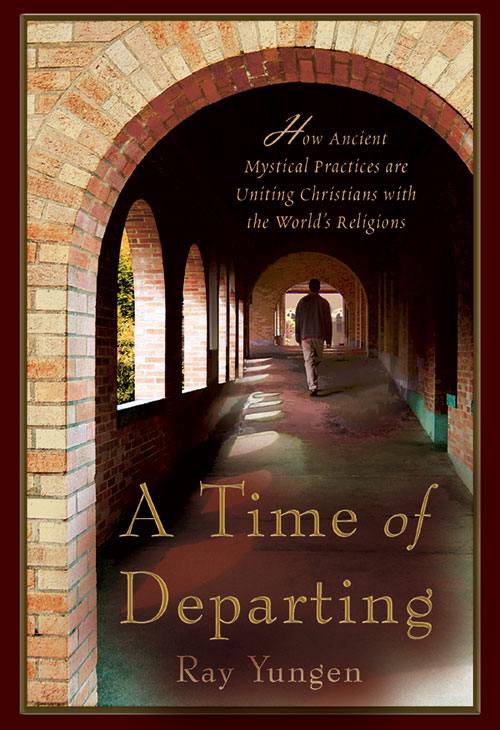
- Yungen, Ray. A Time of Departing. 2nd. Silverton, Oregon: Lighthouse Trails Publishing, 2006.
Post Script: I wanted to point out just a couple of after thoughts. The first part of the verse we read from (v. 20), there is an interesting event that is mentioned. Something I know the Jewish mind would have surely known considering how well the pharisees knew (at least memorized) Scripture. in verse 20 we read this: "Now in the morning, as they passed by, they saw the fig tree dried up from the roots." Now let's read from Hosea 9:16, and then from Job 18:16, respectively.
Ephraim is stricken;
their root is dried up;
they shall bear no fruit.
Even though they give birth,
I will put their beloved children to death.
His roots dry up beneath,
and his branches wither above.
This miracle of Jesus cursing the fig-tree then, can be seen as one of the many instances Jesus showed Israel He was their Messiah through fulfilling of Old Testament prophecy. Another quick thing I wish to point out is that many Bibles seperate verse 25 from verses 20-24. This shouldn't be. I think you can completely drop verse 26 and not include that at all, however, verses 20-25 should be looked at as a cohesive pericope.
Sunday, April 04, 2010
Assembly Line of god's False Miracles
As soon as they go down, the catchers throw them and push them off to the side to get the next people in. "God" is very efficient -- "The Fast Food of Healing," so-to-speak. I wonder if he was late for a divorce hearing?
Thursday, March 25, 2010
"Prophet" Manasseh "Prophesying" with Benny Hinn via the Slughter of the Sheep
 There are more videos and much to think about over at The Slaughter of the Sheep, I will post this much however, I think Benny Hinn got a bit scared at Manasseh's ambitious "grab-and-throw" before any catchers were near the guy who was "slain in the spirit" (e.g., thrown, roughed up). This second video illustrates what drives these charlatans -- hint: cha-ching!
Sunday, March 14, 2010
Beth Moore's Bible Twisting Exposed
From Extreme Theology:
I recently reviewed two segments of Beth Moore's "Bible teaching" on my radio program and I must admit I was bowled over by just how bad and dangerous her teaching really is. I know she's popular but this woman is NOT rightly handling God's word. Instead, she is twisting the scriptures to her own destruction and the destruction of her hearers.Take a listen for yourself. Not only is this bad, its downright dangerous false teaching!
Friday, March 12, 2010
Wednesday, March 03, 2010
Sunday, February 28, 2010
Tuesday, February 23, 2010
Kim Clement Says Haiti Earthquake Was Supposed To Hit America
There are multiple false prophecies here... I don't have to wait for them to happen, I just know they won't, based just on Kim Clement's record. The video was found at The Word on the Word of Faith. Kim Clement prophesied over me once. Maybe if the band says "that's what God said!" enough someone may believe it.
Friday, February 19, 2010
Thursday, February 18, 2010
Huge Word-Faith/Cult News: Benny Hinn’s Wife (Suzzane Hinn) Files for Divorce

This article came from The Word on The Word of Faith (group blog) -- I am sure that either we will hear of a large sum of money handed over to keep Suzanne Hinn (Benny's wife) quit, or she will start spilling the beans on many aspects of Benny Hinn -- from false miracles, to mistresses, to cover-ups... who knows. This is going to get good! Maybe it will go to court and we will all hear about the corruption together?
By GILLIAN FLACCUSThe Associated Press
Thursday, February 18, 2010; 7:37 PM
ORANGE, Calif. — The wife of televangelist Benny Hinn has filed for divorce in Southern California.
Suzanne Hinn filed the papers in Orange County Superior Court on Feb. 1, citing irreconcilable differences, after more than 30 years of marriage. The papers note the two separated on Jan. 26 and that Hinn has been living in Dana Point, a wealthy coastal community in southern Orange County.
“Pastor Benny Hinn and his immediate family were shocked and saddened to learn of this news without any previous notice,” Benny Hinn Ministries said Thursday in a statement. “Although Pastor Hinn has faithfully endeavored to bring healing to their relationship, those efforts failed and were met with the petition for divorce that was filed without notice.”
Hinn is one of the best known advocates of the prosperity gospel, which teaches that Christians who are right with God will be rewarded with wealth and health in this lifetime.
His TV broadcasts on the Trinity Broadcast Network, a Pentecostal broadcasting juggernaut, and other TV networks are seen by millions of people around the world nearly every day. He travels the globe in his ministry’s plane, named Dove One, holding events he calls “Miracle Crusades” that include spiritual healings.
Hinn has never fully publicly disclosed how he spends the money he raises, but his vast ministry is believed to be a multimillion-dollar operation. There was no mention of finances in the court filing, which listed three recent Southern California addresses for the family.
Over the years, Hinn has been the target of intense criticism from fellow Christians and watchdog groups who call his teachings false and accuse him of raising money only to enrich himself.
He is one of six televangelists under investigation by Sen. Charles Grassley, the Iowa Republican on the Senate Banking Committee, over whether he complied with IRS rules for nonprofits. Hinn has said on his Web site that external auditors ensure his compliance with IRS regulations and that in 2008, 88 percent of the money he collected was spent on ministry.
Benny Hinn Ministries is based in Grapevine, Texas, and operates a church and television studio in Aliso Viejo in California’s Orange County, according to its Web site.
Sorrell Trope, the attorney representing Suzanne Hinn, did not immediately return a call for comment. A woman at his office said the firm does not comment on divorce filings without the client’s approval.
J. Lee Grady, contributing editor of Charisma, a news magazine on the Pentecostal community, said Hinn’s divorce is the latest in a string of high-profile ministry divorces and moral failures among the Pentecostal leaders, beginning with Ted Haggard’s fall from grace in 2006.
Haggard, who is married and has five children, admitted to receiving a massage from a male prostitute and buying drugs from him, but denied allegations he paid the man for sex.
Grady said in an e-mail Thursday that Hinn’s followers will want an explanation for the divorce because of the high profile the couple had.
“It will be devastating to the people who have supported Benny Hinn’s evangelistic work around the world,” Grady said.
“Obviously because their ministry has been very public, they will need to issue a statement to their supporters to explain how this happened,” he said.
Associated Press Religion Writer Rachel Zoll in New York contributed to this report.
Friday, February 12, 2010


Joyce Meyer Lives As a "Little god"

The Meyer Family Compound.(The below is imported from: HugPages)
Joyce Meyer Ministries bought these 5 homes for Meyer and her family. The Ministry pays all expenses, including landscaping and lawn care, property taxes and rehab work. Meyer, her husband and each of their four married children live in the homes, free of charge.
1) Residence of: Joyce and Dave Meyer
Bought: April 27th, 1999
Purchase Price: About $795,000
Square Footage: 10,000
Cost of Improvements: $1.1 Million
Features: 6 Bedrooms, 5 Bathrooms, Gold Putting Green, Swimming pool, 8 Car Heated and Cooled Garage, Guest House with 2 more bedrooms, Gazebo.2) Residence of: Daughter, Sandra McCollom and her husband Steve
Bought: February 12, 2002
Purchase Price: $400,000
Square Footage: About 5,000
Cost of Improvements: About $250,000
Features: 4 Bedrooms, 3 full and 2 half Bathrooms, All-Seasons room, Prayer Room, Media Center and a Home Office.3) Residence of: Son, David Meyer and his wife Joy Meyer.
Bought: June 18, 2001
Purchase Price: $725,000
Square Footage: 4,000
Cost of Improvements: Unknown
Features: 2 Story Colonial, 4 Bedrooms, 2 1/2 Bathrooms, 2 Garages and a Utility Shed4) Residence of: Daughter, Laura Holtzmann and her husband Doug
Bought: March 7, 2001
Purchase Price: $350,000
Square Footage: 2,358
Cost of Improvements: $3,000
Features: 3 Bedrooms, 2 Bathrooms with a Fireplace.5) Residence of: Son, Dan Meyer and his wife Charity
Bought: Mar 13, 2000
Purchase Price: About 200,000
Square Footage: About 2,000
Cost of Improvements: $33,000
Features: Brick Ranch With Full Finished Basement
Now you see where some of your money goes. It's not wrong to make lots of money and enjoy it, this just doesn't feel right for that venue.
The Meyer Ministry HeadquartersIt's only fitting that we see the hub of the Meyer Ministry. I'll let you form you own opinion about what is excessive and what's not. Here's a few highlights from the Jefferson County assessor's office.
The building is decorated with religious paintings and sculptures, and quality furniture. Much of it, Meyer says, she selected herself.
A Jefferson County assessor's list offers a glimpse into the value of many of the items: a $19,000 pair of Dresden vases, six French crystal vases bought for $18,500, an $8,000 Dresden porcelain depicting the Nativity, two $5,800 curio cabinets, a $5,700 porcelain of the Crucifixion, a pair of German porcelain vases bought for $5,200.
The decor includes a $30,000 malachite round table, a $23,000 marble-topped antique commode, a $14,000 custom office bookcase, a $7,000 Stations of the Cross in Dresden porcelain, a $6,300 eagle sculpture on a pedestal, another eagle made of silver bought for $5,000, and numerous paintings purchased for $1,000 to $4,000 each.
Inside Meyer's private office suite sit a conference table and 18 chairs bought for $49,000. The woodwork in the offices of Meyer and her husband cost the ministry $44,000.
In all, assessor's records of the ministry's personal property show that nearly $5.7 million worth of furniture, artwork, glassware, and the latest equipment and machinery fill the 158,000-square-foot building.
As of this summer, the ministry also owned a fleet of vehicles with an estimated value of $440,000. The Jefferson County assessor has been trying to get the complex and its contents added to the tax rolls but has failed.
All expenses including property taxes, renovations, utilities are paid by the ministry.
What do you think?
+++++++++++++++++++++++++++++++++++++++++++++
Tuesday, February 09, 2010
Friday, February 05, 2010
A Short Critique of Emergent Heresy of Tim King That "Oozes" Forth
One should read this update/caveat to these posts for the whole story.
(For More Discussion, See: Emergents Claim We Don't Need to Convert People to Christianity)
(For More Discussion, See: Emergents Claim We Don't Need to Convert People to Christianity)
E is for Eschaton
The end of entropy.In the postmodern matrix there is a good chance that the world will reverse its chronological polarity for us. Instead of being bound to the past by chains of cause and effect, we will feel ourselves being pulled into the future by the magnet of God's will, God's dream, God's desire. This magnetic "future-natural" orientation differs wildly from the mechanistic modern view of the world set in motion by a Prime Mover who made and wound up the clock long ago and ever since has let it unwind naturally, occasionally intervening with a small correction.This new vision sees the universe as only partially created, an unfinished symphony, a masterpiece in progress. In this eschatology we are invited to be part of God's creative team working to see God's dream for the universe come true (in other words, working to see God's will be done on earth as in heaven). In this way our relationship with God is more than interactive; it is collaborative. It is more than just a matter of God interacting with us; it is a matter of God inviting us to be creative partners (subcontractors, if you will) in the construction of a world as it could be from the world as it is so far.In the new eschatology, modern charts, bizarre predictions (a tired and tiring game for anyone who knows church history), and apocalyptic novels pretending to something more than purely fictional status will be left behind. (See Hope.)As people who are being pulled toward an "all-things-new" world to come, we bear the fresh scent of the approaching spring, not the stale cologne of the fading winter.
- Leonard Sweet, Brian D. McLaren, and Jerry Haselmayer, A Is for Abductive: The Language of the Emerging Church (Grand Rapids, MI: Zondervan, 2003), cf. Eschaton, 113-114.
Yes, you read that right, they think they can stop entropy. I do not have the time or will to explain all that is above (get Bob Dewaay's book if you want to see a more in-depth overview of this topic), however, much of the home-church movement and the rash of videos put out about home church movements believe the above in a "postmodern matrix." I consider it a miracle in my mind's eye that God, for the entire history of mankind, has made Himself eminent and coming. We are to be like the servant who watches for the return of his master (Luke 12:30). The Apostles did it, the Church Fathers acted like it, the Reformers knew it, I practice it. Again, it is truly a miracle that God puts on man's heart the idea that the end is near and that man's life is not in control by himself, that something outside of man truly controls it (James 4:13-15).
The men in the video raise themselves up to the level of God and live in their "creative" moment rather than give to God what is God's because they are giving all to Caesar. Which brings me to world religions, another aspect of this "new" movement that is all the rage.
Popular books such as the Ragamuffin Gospel, Celebrating Discipline, Velvet Elvis, Irresistible Revolution (see my critique), or DVDs like Be Still -- you have these "contemplative stars" up and coming that mention that these various beliefs share a grand-story. Many of these books mentioned promote the idea that salvation can be found in these other constructs. I had one pastor drop off an armful of books to me (yes, I said a pastor), some of them being the above, and if you take them as a whole, you get the following:
1. that the first three miracles in John were inserted by writers to “woo in pagans,” as they are themselves adopted from pagan stories (so John lied to save souls... the "greater good" thing, or, the church at a later date corrupted Scripture in order to save souls, so which parts of Scripture are not corrupted?);
2. the Virgin Birth was also a deep seated fear of sexuality and not really a miracle;
3. books that teach that penal substitution as a vile doctrine;
4. that Hell is not a place for persons to be placed after a future judgment, and that Hell is actually here now and that we must bring in God’s Kingdom (separate from that future judgment);
5. these books say we do not have the Gospel right yet;
6. they teach that travelling to Buddhist temples and practicing meditative techniques in these temples is Christian;
7. they show that many of the practices rejected by the Reformers are in fact useful to the Christian;
8. they show that Yoga can make one closer to God and to realize and experience the “divine;”
9. they teach that the doctrines of the Trinity, nature of Christ, nature of Scripture, and the nature of marriage are “still on the table,” doctrinally;
10. teach that Paul was really communicating Platonism and not bringing us Scripture;
11. on-and-on.
If that is not an attack on the essentials, then I don't know what is. In The Ragamuffin Gospel for instance, the author, Brennan Manning recommends or practices the following:
1. that he attends Mass regularly,
2. that he believes it is wrong for churches to require that homosexuals repent before they can be members,
3. that he promotes the use of mantras to create a thoughtless state of silent meditation,
4. that he spent six months in isolation in a cave and spends eight days each year in silent retreat under the direction of a Dominican nun,
5. that he promotes the dangerous practice of visualization,
6. that he quotes very approvingly from New Agers such as Beatrice Bruteau (who says, “We have realized ourselves as the Self that says only I AM ... unlimited, absolute I AM”) and Matthew Fox (who says all religions lead to the same God),
7. and that he believes in universal salvation, that everyone including Hitler will go to heaven.
- David Cloud “Beth Moore on the Contemplative Band Wagon," August, 2008; see also [in regards to Manning] pages 82-90 of the book by Ray Yungen, A Time for Departing: How Ancient Mystical Practices are Uniting Christians with the World's Religions [Silverton, OR: Lighthouse Trails Publishing, 2006]; also I recommend Watchman's Bagpipes posts on Beth Moore. There are better women teachers "out there.")
(I must quickly note that I do not believe that Catholics are not saved or damned for merely being Catholic. A Catholic is saved by whom he or she believes Christ is in comparison to say, the co-redemptrix or co-mediatrix of the Virgin Mary. That being said, what the emergent's are doing is rejecting what the Reformation stood for and relegating our "protests" - where we get Protestant from - to a non-essential in their "postmodern matrix." Catholics have a similar "kingdom now" theology that infects their theology and places the Church as a body politic into a very ego-centered co-creator mode where the church will, in one sense, reverse entropy as they do not have a proper understanding of Daniel's last week, as do the Word of Faith movement. // I must also point out that for a church that has its people studying Beth Moore, this is a great opportunity to deal with her unhealthy view of generational sin and taking Scripture out of its intended historical, theological expression and personalizing it or twisting it to the degree she does. I know, opening your Bible a few more times is sooo horrible [17:10-15])
In her book When Godly People Do Ungodly Things (2002), Beth Moore recommends contemplative Roman Catholic Brennan Manning, to wit., she says of Manning that his contribution to our generation “may be a gift without parallel” (p. 72) and calls Ragamuffin Gospel “one of the most remarkable books” (p. 290). So one can see how close to home this entire movement is hitting. I laughed when the interviewer brought up Thomas Merton! Here I must post a portion of my chapter for a proposed book on the subject, enjoy:
==================================================
In a November 2004 Christianity Today article written by Andy Crouch, titled “Emergent Mystique,” Bell said, “We’re rediscovering Christianity as an Eastern religion, as a way of life” (emphasis added). Thomas Merton, a Catholic monk, predated Bell in his popularizing of interspirituality by “[opening] the door for Christians to explore other traditions, notably Taoism (Chinese witchcraft), Hinduism and Buddhism.”[1] In fact, Merton said that he saw “no contradiction between Buddhism and Christianity,” saying that he intended “to become as good a Buddhist as [he] can.”[2], [3] It seems at first glance that the emergent movement is missing a theological focal point. Unfortunately, Brian McLaren does not believe that we, as a church body politic, have even reached a consensus of what orthodoxy is.
In that same Christianity Today article, Brian McLaren is quoted as saying that he does not “think we’ve got the gospel right yet.... I don’t think the liberals have it right.[4] But I don’t think we have it right either. None of us has arrived at orthodoxy.”[5], [6] Agreeing apparently with Brian McLaren that we have yet to get the gospel right is David G. Benner, who says that the “spiritual climate is ripe... [for]... Jesus seekers across the world are being prepared to abandon the old way of the written code for the new way of the Spirit. Paul told us long ago we've been freed by the gospel to live a new way, but we've not known what it is or how to do it.”[7] McLaren says we do not have the Gospel right yet... Benner says we do not have it right either, yet, we should look to Eastern mysticism to get it correct? I don’t think so. Not only do these authors deny that the Gospel has been known or lived in the past, they teach that orthodoxy has yet to be formulated. Yet in a self-refuting manner they seem to accept universalism as an orthodox doctrine. Universalism is the idea that every “act of worship is accepted by the divine regardless of the theological cloak in which it is hidden[,] since all persons posses divinity within, all deserve the love of the Supreme.”[8] This universalism is pointed out in an excellent book entitled, Reforming or Conforming? Post-Conservative Evangelicals and the Emerging Church:[9]
The gospel, according to the emergent thinkers, is not about individual conversation. It is not about how people get “in.” It is about “how the world will be saved from human sin and all that goes with it....”[10] This sounds close to the mark until we examine more thoroughly what is meant by the terminology. Their concept of “world” does not simply involve humans who don’t believe in Christ. The emergent gospel is not just bringing unbelievers to the Savior for the forgiveness of sin and the imputation of God’s righteousness. There is more, asRob Bell informs us:Salvation is the entire universe being brought back into harmony with is maker. This has huge implications for how people present the message of Jesus. Yes, Jesus can come into our hearts. But we can join a movement that is as wide and as big as the universe itself. Rocks and trees and birds and swamps and ecosystems. God’s desire is to restore all of it.[11], [12]
McLaren continues the thought: “Is getting individual souls into heaven the focal point of the gospel?” I’d have to say no, for any number of reasons. Don’t you think that God is concerned about saving the whole world?... It is the redemption of the world, the stars, the animals, the planets, the whole show.”[13] According to McLaren, “The church exists for the world - to be God’s catalyst so that the world can receive and enter God’s kingdom more and more.”[14]
When asked to define the gospel, Neo (the main philosophical character in McLaren’s novels) replies that it could not be reduced to a little formula, other than “the Kingdom of God is at hand.”[15] Narrowing this definition is not easy, but McLaren gives some insight when he writes,I am a Christian because I believe that, in all these ways, Jesus is saving the world. By the “world” I mean planet Earth and all life on it, because left to ourselves, un-judged, un-forgiven, and un-taught, we will certainly destroy this planet and its residents.[16]
In Doug Pagitt and Tony Jones’ book, The Emergent Manifesto of Hope, we find an emphasis on this universalism:In summary, we give the following statement of our understanding about the widening scope of salvation:Not only soul, whole body!
Not only whole body, all of the faithful community!
Not only all of the faithful community, all of humanity!
Not only all of humanity, all of God's creation![17]
In order to accomplish their understanding of the above, much must change in Christian theology, are these emergent leaders up for the task? It seems so:And as a part of this tradition, I embrace the need to keep painting, to keep reforming. By this I do not mean cosmetic, superficial changes like better lights and music, sharper graphics, and new methods with easy-to-follow steps. I mean theology: the beliefs about God, Jesus, the Bible, salvation, the future. We must keep reforming the way the Christian faith is defined, lived, and explained.[18]
Brian McLaren declares his allegiance to this change as well:...believing that our message and methodology have changed, do change, and must change if we are faithful to the ongoing and unchanging mission of Jesus Christ. In other words, I believe that we must be always reforming, not because we've got it wrong and we're closer and closer to finally “getting it right,” but because our mission is ongoing and our context is dynamic. From this viewpoint “getting it right” is beside the point; the point is “being and doing good” as followers of Jesus in our unique time and place, fitting in with the ongoing story of God's saving love for planet Earth.[19]
Similarly, at a 2004 seminar entitled, “A New Theology for a New World,” at the Emergent Conventionin San Diego, Tony Jones said:We do not think this is about changing your worship service. We do not think this is about... how you structure your church staff. This is actually about changing theology. This is about our belief that theology changes. It’s not just the method that changes.[20]++++++++++++++++++++++++++++++++++++++++++++++
[1] Wayne Teasdale, The Mystic Heart: Discovering a Universal Spirituality in the World’s Religions (Novato, CA: New World Library, 1999), 39.[2] Patrick Hart, ed., Thomas Merton Monk: A Monastic Tribute (Collegeville, MN: Cistercian Publications, 2005), 88. Full quote:There were so many points of contact with Zen Buddhist teaching in all this that I couldn't help asking whether he thought he could have conic to these insights if he had never come across Zen. "I'm not sure," he answered pensively, "but I don't think so. I see no contradiction between Buddhism and Christianity. The future of Zen is in the Nest. I intend to become as good a Buddhist as I can."[3] “New Agers ‘see themselves as advanced in consciousness, rejecting Judeo-Christian values and the Bible in favor of Oriental philosophies and religion.’ Walter Martin, The New Age Cult,” Mark Water, World Religions Made Simple: Tough Questions, Clear Answers (Chattanooga, TN: AMG Publishers, 2002), 173.[4] While these authors and pastors try not to be labeled as “liberal,” that is exactly what they are. In an interview withRob Bell (audio of which can be found at Fighting for the Faith... right around forty minutes into the program) where he is praising the TNIV -- a gender neutered Bible -- Rob himself says he is in the middle of the progressive movement: “My name isRob Bell , I’m a pastor in Grand Rapids Michigan, the epicenter of progressive culture.”
This can also be found as well under iTunes free podcasts under Fighting for the Faith, dated at 9-1-09, the podcast is titled, “What isRob Bell Going To Do Now That The TNIV is Going to Be Discontinued?” One of the founders of the emergent movement, Mark Driscoll notes as much as well:Emergent liberals range from those on the theological fringe of orthodoxy to those caught up in heresy that critiques key evangelical doctrines, such as the Bible as authoritative divine revelation; God as Trinity; the sinfulness of human nature; the deity of Jesus Christ; Jesus' death in our place to pay the penalty for our sins on the cross; the exclusivity of Jesus for salvation; the sinfulness of homosexuality and other sex outside of heterosexual marriage; and the conscious, eternal torments of hell. Some emerging house churches are also emergent liberal in their doctrine. Emergent liberals are networked by organizations such as the Emergent Village, which is led by author and theologian Tony Jones (Jones is no longer a youth pastor but is involved at Doug Pagitt's church), along with other prominent emergent leaders such as Pagitt, Karen Ward, and Tim Keel. The most visible emergent liberal leaders are Brian McLaren andRob Bell . Emergent liberals are commonly critiqued as those who are merely recycling the liberal doctrinal debates of a previous generation without seeing significant conversion growth; they are merely gathering disgruntled Christians and people intrigued by false doctrine. Albert Mohler, president of the Southern Baptist Theological Seminary, offers this critique:
- When it comes to issues such as the exclusivity of the gospel, the identity of Jesus Christ as both fully human and fully divine, the authoritative character of Scripture as written revelation, and the clear teachings of Scripture concerning issues such as homosexuality, this [emergent liberal] movement simply refuses to answer the questions."
Religion Saves + Nine Other Misconceptions, 217.[5] Andy Crouch, “Emergent Mystique,” 37-38.[6] A caveat here: if he does not think liberals have it right, and then says he does not have it right either... is he then saying he is on the conservative side of the issue? If he is on the right, then where does that leave people like D. A. Carson, Millard Erickson, or myself for that matter? I guess I do not fit within what he considers orthodox... maybe we’re “fascists” of sorts?[7] David G. Benner, Sacred Companions: The Gift of Spiritual Friendship & Direction (Downers Grove, IL: InterVarsity Press, 2002), 9 (emphasis added).[8] David K. Clark and Norman L. Geisler, Apologetics in the New Age: A Christian Critique of Pantheism (Grand Rapids, MI: Baker Books, 1990), 70-71.[9] Gary L. W. Johnson and Ronald N. Gleason, (Wheaton, IL: Crossway Books, 2008), 285.[10] Brian McLaren, The Last Word After That: A Tale of Faith, Doubt, and a New Kind of Christianity (San Francisco, CA: Jossey-Bass, 2005), 69.[11] Bell, Velvet Elvis, 109-110.[12] A humorous aside: could you imagine bickering back-and-forth with God if Job co-opted everything God created? As God would point out how small Job was in comparison to His creation, Job would respond, “no, I am part of this wide and big universe, I am not tiny! I am bigger, in fact, than that Behemoth you just showed me.[13] Brian McLaren, A New Kind of Christian: A Tale of Two Friends on a Spiritual Journey (San Francisco, CA: Jossey-Bass, 2001), 184.[14] Ibid., 121.[15] Ibid., 151.[16] Brian Mclaren, A Generous Orthodoxy (Grand Rapids, MI: Zondervan Publishing House, 2004), 106.[17] Doug Pagitt and Tony Jones, An Emergent Manifesto of Hope (Grand Rapids, MI: Baker Books, 2007), 82-83 (emphasis added).[18] Bell, Velvet Elvis, 12 (emphasis added).[19] McLaren, A Generous Orthodoxy, 214. I should point out that we can never really be good, this humanistic goal is not Biblical.[20] Charlie H. Campbell, The Emerging Church & the Battle for Truth, DVD (can be found at: www.alwaysbeready.com), 26:50 into the presentation.
==================================================
I guess, upon reviewing the above, if you don't think that there will be a great falling away (2 Thessalonians 2:3), and you believe that doctrine is ever reforming and changing, and that there is no solidity to Christian culture throughout the ages, then you can simply reject all of these critique and say that we are all "heresy hunters," similar to the leaders in the Word Faith movement simply labeling their objectors and therefore not dealing with their arguments. I regret that I can say this, but I had a pastor defend (straight faced) the conservative nature of the following "theologian" when I pointed out that he had said the following:
...Anyway, my point in all this is that the doctrine of the Trinity is still on the table. Some people, it seems to me, would like for us to no longer debate certain "sacred" doctrines -- the Trinity, the nature of Christ, the nature of scripture, the nature of marriage etc. And these persons tend to get very jumpy when emergent-types discuss these sacrae doctrinae, especially in books and at conferences that are being taped. "This is dangerous," they say.
I say it's dangerous to stop talking about these things, and it leads to a hegemony among those who already control the seminaries, colleges, magazines, radio stations, conferences, publishing houses, and magazines. We will continue to debate such things.
And furthermore, didn't some famous theologian once say, "None of us is truly orthodox"? Who was that, anyway?
(Tony Jones - Theoblogy)
(I am happy to say however, that this pastor is on the road to orthodoxy.) This zeitgeist is behind much of these "teachers," and it is infecting many churches as I speak. Unity in the name of ecumenical progressiveness. I prefer Scripture where we are told in Jude 3 by the Apostle that he "felt [he] had to write and urge you [us] to contend for the faith that was once for all entrusted to the saints." This seems vastly different the the anthropogenic fundamentalism (ego-centric) we find in the emergent thinking. King talks about not "drawing lines" and not feeling like you need to convert the "Sufi, or whatever religion we are dealing with." However, Jesus drew lines in the sand, literally (John 8:1-11), making people turn in apparent shame, not to mention Jesus mentioning that even homes will be split over this "once and for all delivered faith" (Luke 12:49-56). Right after this mentioning of this hyper ecumenism King describes God in a pantheistic way. Pathetic!
Ahhh, King says at the end that they are bringing a "new earth." I didn't listen to the whole video, I listened to a short bit, stopped it, wrote, and then proceeded in this manner. Here at the very end we find this idea of "co-creators" ("little gods" in Word of Faith jingo) bringing a "new earth," or, utopia of sorts, to mankind. And Tim King applies "egoism" to us? Again, as I watch this video series from time-to-time I have a reoccurring feeling that God uses irony (or the persuading demons that the OT and NT talk about), because the "Ooze" seems a fitting name for what "oozes" forth from this video channel.


The Big Three
Subscribe to:
Posts (Atom)