Showing posts with label Eulogy. Show all posts

Tuesday, February 16, 2010

Howard Zinn (1922-2010)... passing from "this hell" to His hell


Some say that Zinn has such a distorted view on history that it is like if Zinn saying "to you, 'Would you like to see Versailles?' and then took you on a tour of a broken shed on the outskirts of the palace grounds. 'You see, pretty shabby, isn’t it?'" I think its worse than that. Rather, I like what Harvard University professor Oscar Handlin said in his 1980 review of Zinn's book when he denounced the "deranged quality of his fairy tale, in which the incidents are made to fit the legend, no matter how intractable the evidence of American history." That's better. A bit more of Handlin's review:

“It simply is not true,” Mr. Handlin noted,
that “what Columbus did to the Arawaks of the Bahamas, Cortez did to the Aztecs of Mexico, Pizarro to the Incas of Peru, and the English settlers of Virginia and Massachusetts to the Powhatans and the Pequots.” It simply is not true that the farmers of the Chesapeake colonies in the seventeenth and early eighteenth centuries avidly desired the importation of black slaves, or that the gap between rich and poor widened in the eighteenth-century colonies. Zinn gulps down as literally true the proven hoax of Polly Baker and the improbable Plough Jogger, and he repeats uncritically the old charge that President Lincoln altered his views to suit his audience. The Geneva assembly of 1954 did not agree on elections in a unified Vietnam; that was simply the hope expressed by the British chairman when the parties concerned could not agree. The United States did not back Batista in 1959; it had ended aid to Cuba and washed its hands of him well before then. “Tet” was not evidence of the unpopularity of the Saigon government, but a resounding rejection of the northern invaders.
Reason.com asks the question, "Just how poor is Zinn's history?" They then answer it:

...After hearing of his death, I opened one of his books to a random page (Failure to Quit, p. 118) and was informed that there was "no evidence" that Muammar Qaddafi's Libya was behind the 1986 bombing of La Belle Discotheque in Berlin. Whatever one thinks of the Reagan administration's response, it is flat wrong, bordering on dishonest, to argue that the plot wasn't masterminded in Tripoli. Nor is it correct to write that the American government, which funded the Afghan mujahadeen in the 1980s, "train[ed] Osama bin Laden," a myth conclusively debunked by Washington Post correspondent Steve Coll in his Pulitzer Prize-winning book Ghost Wars.

Of Cuba, the reader of A People's History is told that upon taking power, "Castro moved to set up a nationwide system of education, of housing, of land distribution to landless peasants." Castro's vast network of gulags and the spasm of "revolutionary justice" that sent thousands to prison or the executioners wall is left unmentioned. This is unsurprising, I suppose, when one considers that Zinn recently told an interviewer "you have to admire Cuba for being undaunted by this colossus of the North and holding fast to its ideals and to Socialism....Cuba is one of those places in the world where we can see hope for the future. With its very meager resources Cuba gives free health care and free education to everybody. Cuba supports culture, supports dance and music and theatre."

There is also no mention of the Khmer Rouge or Pol Pot, though in a misleading digression into the so-called Mayaguez Incident, Zinn mentions that "a revolutionary regime had just taken power" in Cambodia and treated its American prisoners rather well. And it is untrue, as Zinn claims, that President Gerald Ford knew Cambodia had released its American captives in 1975 but still allowed a small Marine invasion simply to show American muscle after the Vietnam humiliation.

A People's History is full of praise for supposedly forgotten truth-tellers like "Dalton Trumbo and Pete Seeger, and W.E.B. Du Bois and Paul Robeson," all apologists for Stalinism. (Both Du Bois and Robeson were awarded the Stalin/Lenin Peace Prize by the Kremlin, and both enthusiastically accepted.) There is no accounting of communism's crimes, though plenty of lamentations that, after the Second World War, "young and old were taught that anti-Communism was heroic." Indeed, in the comic book version of A People's History, Zinn writes that the Cold War "would last for over 40 years" but "to keep it going required political and social repression on both sides" (emphasis in original).

Despite conclusive evidence from Russian archives, Zinn suggests the atom spies Morton Sobel and Julius Rosenberg were railroaded with "weak" evidence and their subsequent trials were simply to show "what lay at the end of the line for those the government decided were traitors." When Sobel confessed his espionage to the The New York Times earlier this year, Zinn told a reporter, "To me it didn’t matter whether they were guilty or not."

This is a strange sentiment for someone whose job, one assumes, is to mine the historical record in search of historical truth. But Zinn wasn't, as Schlesinger correctly said, a historian in any traditional sense. Zinn abjured footnotes (there are a number of quotes in A People's History that I couldn't verify), his books consist of clip jobs, interviews, and recycled material from A People's History, and he was more likely to be found protesting on Boston Common than holding office hours at Boston University. But it is clear that those who have praised his work do so because they appreciate his conclusions, while ignoring his shoddy methodology.

This helps explain why few of his acolytes mention the effusive blurbs Zinn provided for David Ray Griffin's two books of 9/11 conspiracy theories, Debunking 9/11 and The New Pearl Harbor, or why A People's History uses the work of Holocaust denier David Irving to inflate the civilian death toll at Dresden....
They end this "eulogy" with this thought, "Call him what you will—activist, dissident, left-wing muckraker. Just don't call him a historian." At another site (same author), he starts out by saying that much of Zinn's critiques came from the left:

Much of the criticism of Zinn has come from dissenters on the left. Arthur M. Schlesinger Jr. once remarked that "I don't take him very seriously. He's a polemicist, not a historian." Last year, the liberal historian Sean Wilentz referred to the "balefully influential works of Howard Zinn." .... Socialist historian Michael Kazin judged Zinn's most famous work "bad history, albeit gilded with virtuous intentions."
Howard is a Marxist/Anarchist, perfectly matched with Shane Claiborne's view of history


Even the socialist magazine Dissent had to say that "pointing out what's wrong with Zinn's passionate tome is not difficult for anyone with a smattering of knowledge about the American past." They continue to point out that this is merely a "polemic disguised as history." I especially like the honesty of David Horowitz's "eulogy." It is called "Spitting on Howard Zinn’s Grave?"
The other day a reporter from NPR called me and asked me for my comments on the death of the lifelong Stalinist and propagandist Howard Zinn. I was a little reluctant because I knew that whatever I said, legions of unscrupulous myrmidons on the left would jump on it and say I had spit on Zinn’s grave. I also knew that while I was interviewed for ten minutes, out of what I said only a 20 second sound-bite would make it onto the air. I don’t begrudge NPR this selection. That’s what their obit was and would have to be, a collection of sound-bites.

Sure enough the bottom-feeders at FAIR pounced on my bite and accused me of spitting on Zinn’s grave. So here’s what I said that was cut from the interview. I’m not putting quotes around it because it’s from memory, but it’s pretty close to some of my remarks and captures the sense of others:  No one should celebrate the death of another human being unless they are child-molesters or murderers. 

Howard Zinn lived to a ripe old age (87), and bad human being that he was, I wouldn’t begrudge him an extra few years; he’s done about as much damage as he could.

Howard Zinn was a Stalinist in the years when the Marxist monster was slaughtering millions of innocent people and launching his own ‘final solution’ against the Jews. Put another way, Howard Zinn was helping Stalin to conduct those slaughters and to enslave  all those who had the misfortune to live behind the Iron Curtain.  Howard never had second thoughts about his commitment to leftwing totalitarians and never flagged in his political commitment to freedom’s enemies. In the years since Stalin’s death, Zinn supported every enemy of the United States in every war, and devoted his writing talents to every socialist tyrant including Mao Zedong who killed 70 million Chinese in peacetime because they got in the way of his progressive agendas.

When the Cold War was over and freedom had won — thanks to all the political forces and figures (e.g., Reagan and Thatcher) that Zinn opposed – Zinn continued his malignant course. He supported America’s enemies right to the end including the Islamic Nazis whose first agenda is to finish the job that Hitler started and then to impose a totalitarian theocracy on the infidel world.

Zinn’s wretched tract, A People’s History of the United States, is worthless as history, and it is a national tragedy that so many Americans have fallen under its spell. It is a political cartoon which even the socialist magazine Dissent described as an intellectual fraud, which it is. All Zinn’s writing was directed to one end: to indict his own country as an evil state and soften his countrymen up for the kill. Like his partner in crime, Noam Chomsky, Zinn’s life’s work was a pernicious influence on the young and ignorant, with destructive consequences for people everywhere.
 Love It! Lets let Dennis Prager finish us out, the other three videos can be found at my sister site:


Sunday, January 31, 2010

A Belated Tribute to Max Hartwell

The Mont Pelerin Society. Early 1980s.

Third Row: Ed Feulner, Allen Wallis, Carl-Johan Westholm, Rose Friedman, Peter Beanholz, Charles King Arthur Seldon, Leon Liggio
Second Row: Max Hartwell, Henry Maivne, Gary Becker, Richard Ware, Arvid Fredburg, Ralph Harris
Front Row: Antonio Martino, Herbet Giersch, Manuel Ayau, James Buchanan, Milton Friedman, Chiaki Nishiyama


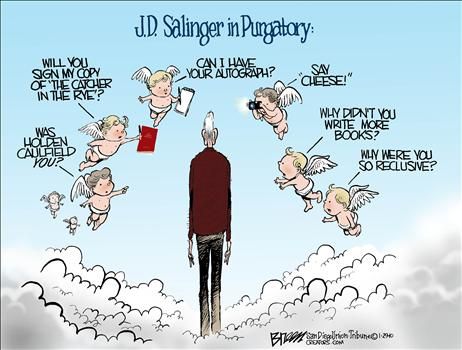
I know JD Sallinger died, but I was not a fan... sorry. However, when someone like Max Hartwell passes, I will write a bit about his from obituary sources. First, I must say that the only thing that unites Professor Hartwell and I is our passion for common sense economics devoid of a "statist" mindset... that's it, that's about as much as I know about economics and where Hartwell sores above the rest.

...Hartwell was a great teacher with an irreverent sense of humour. He loved provoking people and students who could stand up to him became his friends; many are now eminent themselves. Most of the articles he published originated as lectures. His collection The Industrial Revolution and Economic Growth (1971) stands well-used on the shelves of economic historians throughout the world, and still informs many lectures on the subject.

After he semi-retired from Oxford in 1977, Hartwell taught every autumn at the University of Virginia and often at the University of Chicago. A keen controversialist, he was long a member (and for two years President) of the Mont Pelerin Society founded in 1947 by Friedrich Hayek to defend liberal thinking; Hartwell was given to musing about Hayek's reference to the unintended consequences of well-intentioned actions. ...
(Online Library of Liberty)
We are sad to note the passing in March of Ronald Max Hartwell who was one of the greatest economic historians of the industrial revolution. Beginning his career in a small town in country New South Wales, Australia he later moved to Oxford University where he spent his academic life at Nuffield College. Hartwell challenged the Marxist orthodoxy which argued that the Industrial Revolution was largely a disaster for the working class. On the contrary, Hartwell urged, it lead to the greatest expansion of wealth for ordinary people that the world has ever seen. He was interviewed by Patrick O'Brien in one of Liberty Fund's Intellectual Portrait Series in 2000. A DVD of this interview can be purchased, the audio track is available online in various formats, or one can listen online here:


An article for those that like to chew on history:


Wednesday, August 19, 2009

Creator's Sydicates Pay Tribute -- Robert Novak -- RIP


Columnist Robert Novak passed away today, ending an era of political journalism that spanned five decades. Novak rose from a $42.50 a week staff reporter at the Joliet, Illinois Herald News in 1948 to become one of the most influential political reporters of his time, a constant presence in print and television journalism. He was 78 years old.


Novak was the confidant of presidents and politicians of all stripes. (One of his favorite stories was of the wedding reception thrown for him and his new bride Geraldine by her old boss: then-Vice President Lyndon Johnson.)


Most recently, Novak was at the center of the political firestorm resulting from his disclosure, in a July 2003 column, of the CIA employment of Valerie Plame, the wife of former Amb. Joe Wilson, who was deeply embroiled in an apparently contrived controversy surrounding the pre-2003 Iraqi nuclear weapons program. Bob, as he always had before, kept his source’s confidence regardless of the pressure put upon him.


A long life of informing dopes like me. RIP Novak.


Creators Syndicate's columnists pay tribute to Robert Novak:

PAT BUCHANAN: Bob Novak was the finest reporter-columnist of his generation. Often, I have said that, were I an editor of a newspaper and could carry but one column, it would be Novak's. He was a reporter's reporter whose column invariably carried information no one else had gotten. He was passionate about his craft, about his convictions and, following his conversion to Catholicism, about his Church. While I have known Bob for more than 40 years, ever since our days together on "The McLaughlin Group" and CNN's "Crossfire" -- both of which began in 1982 -- and later, "Capitol Gang," we have been good friends. And a more reliable friend in time of need one could not find. About Novak there was nothing artificial or synthetic. His death leaves a hole in our lives and our hearts. My wife Shelley and I will miss our dinners at Bethany and Fenwick Island with Bob and Geraldine. May he rest in peace.


MARK SHIELDS: As a political reporter, Bob Novak had few equals and no superiors. He was tireless, he was fearless, and he had sources that nobody else did. Bob Novak loved his country, he loved his family, and he loved what he did. He was first and foremost a reporter. He hated to lose and was fiercely competitive, whether it was politics, sports or an argument. But what probably is most misunderstood about Bob Novak was that beneath that gruff, sometimes menacing exterior, there was a generous and open heart. If you were Bob Novak's friend, you were always Bob Novak's friend — even long after you had lost your power or your position or your status in Washington. He never decided his guest lists based on who was on the weekend's network talk shows. He embodied and personified loyalty.


WALTER WILLIAMS: I can't think of a more honorable and decent person than Bob Novak.


BILL O'REILLY: Robert Novak was called The Prince of Darkness because he told the truth, and honesty can sometimes be bleak. His legacy will be of a hard-hitting, honest reporter who served his country well.


MICHELLE MALKIN: Robert Novak has had a huge influence on my career. During a college conservative journalists’ confab, he urged us to seek metro newspaper jobs, pay our dues, and try to stay out of Washington for as long as possible. I took the advice to heart and left D.C. after a year as an intern at NBC to take my first newspaper job at the L.A. Daily News and then the Seattle Times. “Pundits” and “strategists” come and go, but Novak’s longevity is a tribute to — and result of — his newspaperman sensibilities and investigative chops.


R. EMMETT TYRRELL JR.: It took five cancers throughout his adult life to kill Bob Novak. He was one of the toughest men I have ever known. He was also one of the most intelligent, energetic, cheerful and kindest. Ignore that sobriquet, "Prince of Darkness." He was an eminently decent man, and as a member of the Board of Directors of The American Spectator during the days when the Clinton administration hauled us before a grand jury, he stood with us foursquare. Though a daily journalist, he was a man of great depths, widely read and deeply thoughtful beneath his gruff veneer. Late in life, he became a person of faith, converting to Catholicism because, as he said in his wonderfully informative memoir, he was jolted by the thought that "life is short but eternity is forever."


L. BRENT BOZELL: Bob Novak possessed all the qualities of an exemplary journalist. During his storied career, Bob produced some of the finest work of anyone in the business of gathering and reporting news. He was hardworking, accurate and independent.

Above all, Bob was tough and fair. Politicians and bureaucrats feared him for what his well placed sources revealed. Rival reporters envied him for the many exclusives he delivered over the years. We will always admire his lifelong devotion to journalism, which produced a standard that few reporters could hope to replicate.

Bob lent years of support to the Media Research Center and was also a personal friend. All of us at the MRC will miss Bob for his accuracy, integrity and his work ethic.


SUSAN ESTRICH: I discovered Bob Novak when I was in college. My political science teacher assigned us Rowland Evans and Robert Novak's classic tomes: "Lyndon B. Johnson: The Exercise of Power" (1966) and "Nixon in the White House: The Frustration of Power" (1971).

It was like giving the Bible on baseball to a kid who'd watched the game all her life without ever really knowing what all those signals mean. This is how power works. This is how Washington operates. This is how you get someone to do something he doesn't want to do. This is what happens when people get in the room with the president.

Susan Estrich's complete column will be available Wednesday, August 19.


MICHAEL BARONE: Robert Novak, who died today, wrote thousands of news stories and columns in his 50-plus years as a Washington journalist. In each one, he said, he broke news. That is a staggering achievement. But journalism can be ephemeral and books, even in the digital age, live on. And here Novak also made a singular contribution.

His best known book to today’s readers is his 2007 autobiography The Prince of Darkness, which I had the honor to review in the Weekly Standard. It’s a superb and unflinchingly self-revealing piece of work. ...

Bob Novak, as he reveals in The Prince of Darkness, was a very smart man, a conservative by conviction and a pessimist by temperament. Like so many of his generation, coming of age in the conformist America of the 1950s, he wanted to be thought of as a regular guy—a sports fan, a heavy drinker and smoker (until he quit both), a caustic realist. But he was also an idealist with a fine appreciation for the few people he encountered who he thought were really smart.

Read Michael Barone's full commentary.


COL. OLIVER NORTH: Journalism lost a giant this week when my friend Robert Novak was called home to be with our Lord. I first met "the Prince of Darkness" while I was serving on Ronald Reagan's National Security Council staff.

Rather than accepting and repeating the second-hand misinformation about the Nicaraguan resistance that appeared in most of the mainstream media, Novak wanted to meet and talk to the freedom fighters in Nicaragua. He mentioned this to someone at the White House, and I was told "go down Pennsylvania Avenue and have a private, off-the-record meeting with Bob Novak." I did as ordered, put him in touch with the resistance political and military leaders, and the rest is history. Within days, Bob Novak was in Central America, risking his life, accompanying those who were fighting for their liberty against the Soviet-supported, communist Sandinista government.

Read the complete commentary from Oliver North.


AUSTIN BAY: Mr. Novak was inspiring. Blessed with superior communications skills, both in print and on video, Robert Novak's commentaries were always considered opinion laced with analysis and solid reporting. He will be missed.


JACKIE GINGRICH CUSHMAN: Robert D. Novak was fearless in his writings and television appearances. His approach of providing investigative reporting in addition to opining on political topics resulted in captivating and often controversial columns. The “Prince of Darkness” cast a long shadow while following his “journalistic philosophy — to tell the world things people do not want me to reveal, to advocate limited government, economic freedom, and a strong, prudent America — and to have fun doing it.”


LINDA CHAVEZ:
Robert Novak may have reveled in his designation as the "Prince of Darkness," yet he was anything but. He was unfailingly generous on a personal level, even kind. I got to know Bob in the early '80s, first as a subject of his reporting. In my early years in public life in the Reagan administration and as a Senate candidate, Bob wrote several columns in which I figured. I always found them to be meticulously researched, fair and well-crafted. Unlike so many in the opinion world today, Bob grounded his columns in reporting. He searched out the facts before he ventured an opinion. He was one-of-a-kind and will be sorely missed, but his legacy will continue to inspire all of us in the commentary business.


PHYLLIS SCHLAFLY: Bob Novak was an honest reporter who consistently exposed the truth about politics, policy, and political personnel. He will be sorely missed.


TONY BLANKLEY: Bob’s sheer journalistic integrity was a thing to behold. When I served as Speaker Newt Gingrich’s press secretary, we never got a single break from Bob — nor a single inaccurate word of reporting or analysis. How much Washington reporting today could use Bob Novak’s impeccable integrity and diligent reporting. What a loss to the public debate.


ROGER SIMON: When I first went on the presidential campaign trail as a young reporter from Chicago, Bob Novak was one of the only people who would talk to me. In those days, if you weren't from Washington, you didn't cover national politics -- and it could be very lonely on the bus. But Novak sat down next to me one day and said he knew what I was going through and that I shouldn't worry, that I would be fine. He told me how on his first campaign he was away from home for several months and worried about how he was going to pay his electric and water and phone bill from the road. I told him that was my precise worry, but I had been too embarrassed to ask anybody else on the bus what to do. "It's nothing to worry about!" Novak said. "When I got home, my electricity and phone and water had all been turned off!" Then he laughed uproariously. Beneath what some considered a daunting exterior, he actually could be a very warm and funny guy.


DEBRA SAUNDERS: Robert Novak set the standard for combining relentless reportage with informed opinion. He was a journalist first and foremost. He had the pulse of Washington, and that made him a must-read writer.


LAWRENCE KUDLOW: Now we say goodbye to Robert Novak, who passed away early Tuesday morning at the age of 78. Yet another conservative icon has left us. He was a good friend and an amazing reporter. In fact, I believe he was the best reporter of his generation, which spans all the way back to the Dwight D. Eisenhower years.

Bob had a lot of opinions -- conservative opinions; Reaganesque opinions. But his pursuit of journalistic detail, facts, scoops and stories that no one else got was remarkable. He was "old school" in this respect, which is why he was so esteemed by political allies and critics alike.


Thursday, July 23, 2009

Henry Surtees Fatal Formula 2 Crash -- Tree Huggers Partly to Blame


I wanted to post something a reader who follows racing had to say, it is illuminating and has prompted me to add a tag or two below. Enjoy (and thanks Wood)


A couple of factors contributed to this fatality. Notice how close the tree is reducing the runoff area in the initial incident. If this tree was removed the wheel most likely wouldn't have bounced back on to the racing surface. Secondly, the current F2 is a brand new series, only the 4th race for this chassis. There are tethers that are designed to prevent wheels from flying off. Still, wheels flew off of both cars in relatively low speed shunts. Williams F1 designed this chassis. ...


Dang, I forgot to add that Brands has been trying to improve the safety of the circuit, but tree huggers have protested the removal of trees, [therefore] Brands has been bogged down trying to make improvements. Hey, at least that tree is safe.


Wednesday, July 22, 2009

Henry Surtees Fatal Formula 2 Crash


My thoughts and condolences go out to Henry's friend's and family. The son of motorsport legend John Surtees has died after being hit on the head by a wheel during a Formula 2 (F2) race at Brands Hatch in Kent. Henry Surtees, 18, was airlifted to the Royal London Hospital after he was struck by a wheel which flew off Jack Clarke's car. Sunday's race was red flagged while Surtees was removed from the scene. His father won the Formula 1 World Championship in 1964 having previously won seven motorcycle world titles. The accident happened between the circuit's Westfield Bend and Sheene Curve. Clarke's car hit a tyre wall and a wheel came off, hitting Henry Surtees on the head, knocking him unconscious.

Sunday, May 03, 2009

Jack Kemp -- R.I.P. (Gold Standard Stalwart)

(Hot Air h/t)

American Spectator January article, The Importance of Jack Kemp:


"When you tax something you get less of it, and when you reward something you get more of it."

With that simple exhortation -- and this is a man born to exhort -- Jack Kemp changed his party, changed his country and, ultimately, changed the world.

He had some help, of course. Ronald Reagan, notably. Robert Bartley and the editorial board of the Wall Street Journal. The late Jude Wanniski, one-time member of the WSJ board and author of The Way the World Works. Arthur Laffer, he of the famous Laffer Curve. Others. A number of distinguished others.

Yet for an idea to revolutionize the way the world thinks and works, in the American system it helps if one holds elective or appointed office. Elected as a Congressman from the unlikely world-changing precincts of Buffalo, New York, where he had come to fame as the quarterback for the Buffalo Bills, Kemp evolved into the enthusiastic godfather of what became known as "Reaganomics." or, in its other, equally familiar designation, "supply-side" economics.

The announcement that Kemp is facing a fight with an as-yet undescribed cancer means only that cancer is in for a hell of a fight. The Kemp family has understandably and appropriately asked for its privacy to be respected. Also, the usual disclaimer here that, like a lot of fortunate young conservatives, I worked for Kemp, in my case as an aide in the Department of Housing and Urban Development. But cancer or no cancer, it is past time to give Kemp his due for what can only be described as an extraordinary political career. One can only await a really good Robert Caro-size biography that sets down the particulars for history.


THOUSANDS OF MEN and women have served as members of the U.S. House and U.S. Senate since the dawn of the Republic in 1789, with more still added to those numbers from state governors and Cabinet officials or military leaders. Most have transited across the national stage in anonymity, their impact as a footprint in a windblown desert. In every period of American history there have emerged powerful elected or appointed leaders, presidents of the United States included, whose influence derived solely from their position and vanished the instant they left it. There is a medium-sized list of those who emerged from the House, the Senate, the governors' offices to run for president, falling back into the status of historical asterisks when defeated.

Yet there is another category, a much rarer group of Americans who, whether they tried for the presidency and failed (as did Kemp) or never tried at all, have left a lasting mark on America and sometimes the world as well. This group includes that famous trio of United States Senators from the early 19th century, Daniel Webster, Henry Clay and John C. Calhoun. Webster and Clay fought ferociously to preserve the Union, Calhoun with equal fervor to make the claim for states' rights. Added to that list would be Webster's successor as Senator from Massachusetts, Charles Sumner, famous for his successful fights as a leader of the anti-slavery forces and his role in insisting on the civil rights of black Americans. Later in the 19th century Congressman William Jennings Bryan burst on the scene as a father of populism. Losing the presidency three times, he nevertheless championed causes like the graduated income tax and the popular election of senators, ideas now fact for decades. Bryan's fellow Nebraskan George Norris fathered the Tennessee Valley Authority as a key figure in the early-20th century progressive movement, while Arizona's Barry Goldwater would lose the presidency in a landslide even as he fathered the modern conservative movement, a movement whose early pioneers included Senator Robert Taft. This is not to exclude Americans holding appointive office like presidential loser William Seward, whose decision as Secretary of State to purchase Alaska was mocked by his contemporaries yet is the source of much satisfaction to latter-day Americans, whether they be enthusiasts for the environment, oil drilling -- or, lately, Sarah Palin! So too is George C. Marshall an American icon, not just for his role as Army Chief of Staff in winning World War II but his creation of the Marshall Plan that came to the rescue of post-war Europe while laying the foundation for the democratic Western Europe of the last sixty-plus years.

Jack Kemp long ago earned his role in this American pantheon. He did not invent "supply-side" economics. Yet in a day and age when many members of Congress use their office for nothing grander than prying grandma's Social Security check out of the federal morass and issuing a press release telling the world, Kemp, elected in 1970, set about an entirely different task. He began schooling himself, and eventually his party, about the difference between bread slicing and bread baking economics. As Bartley would later recount in his book The Seven Fat Years: And How To Do It Again, Kemp became the focus of a Washington group (paralleling Bartley's in New York) that focused on the economic woes of the 1970s. What they were, how they got there, and, strikingly, what to actually do about them. Bartley says that Kemp "did bizarre things like sit down and read The General Theory." This would be John Maynard Keynes' less than scintillating tome The General Theory of Employment, Interest and Money, a basic economics text then and now if one wishes to call oneself a Keynesian. It is not to be confused with a romance novel.

With what Washington would eventually realize was the typical Kemp passion, Kemp took an idea about tax cuts and made of it a gospel. In legislative form it became what was called Kemp-Roth, named respectively after Kemp the House sponsor and Delaware GOP Senator William Roth, its Senate champion. At its core, the idea proposed to slash personal income tax rates -- and cut them big time by 30 percent over three years. It was 1978, the middle of the Carter malaise years, and after what Bartley calls a "stormy debate" the bill failed in a conference committee. Kemp kept going. By 1980 he had convinced candidate Ronald Reagan, and the concept was written into the 1980 Republican platform. By August of 1981 President Ronald Reagan was signing Kemp's cause into law. By 1983, the American economy had begun to shake off recession and, in a startling reversal, roared to life. The results were so powerful that Reagan later said France's Socialist President François Mitterrand, Reagan's guest at the 1983 Williamsburg G-7 Summit, wanted to know just exactly what went into America's blossoming and quite vivid economic growth.

For Kemp, this was more than simply passing a piece of legislation. Supply-side represented a real threat to the core beliefs of an entire intellectual class, a class that then -- as now -- considers itself "enlightened." Passing Congressman Kemp one day as he bounded (Kemp bounds, he doesn't walk) up an escalator to a House office building from the Capitol subway, I watched him overtake a moderate Republican Congressman who clearly considered himself a member of this enlightened class, an affliction that, sad to say, is all too bipartisan. After a brief conversation that required Kemp to stand still, he clapped the moderate on the back and -- with a smile, always with a smile -- said: "You know what your problem is? You're an elitist!" And bounded away as his target visibly fumed that someone would mistake his addiction to me-too liberalism as something other than being a champion of the average man.


LIKE A BRYAN or Webster or Goldwater, Kemp never did make that trip to the White House as the occupant of the presidency, although he was the second- half of the 1996 Dole ticket. But his lost presidential run in 1988 did land him in the unlikely spot of Secretary of Housing and Urban Development. It was there that Reaganites huddled in what was generally viewed as one of the least important backwaters of the federal government, a place touched by scandal at that. Ignored by the powers of the Bush 41 administration, Kemp blew into this concrete box with the force of a category five hurricane. If you worked for him you were quickly a part of an ongoing tutorial -- done under the guise of a "brown bag lunch" -- that featured everything from Heritage Foundation policy wonks to Sir Martin Gilbert, the biographer of Winston Churchill, to Alex Kotlowitz, the author of There Are No Children Here. The last was a gripping tale of two boys growing up amid the abysmal failure of liberal urban policy, in this case Chicago's Henry Horner Homes. Also up for discussion was Assets and the Poor, a book about the failures of the welfare system.

It wasn't always tutorials, either. Kemp himself was not only out there in America's inner cities inspecting the failures of urban liberalism, he made damn sure his staff got out there too. I remember one particular tour of the Ellen Wilson project in Washington -- a serious disgrace surrounded in broad daylight by drug dealers that is, I believe, now gone. The entire department rocked, at times shell shocked, to Kemp's preaching of the gospel of capitalism and tax cuts. It didn't stop there, either. He was, he liked to crack, the only Housing Secretary with his own foreign policy, a small detail that used to drive the real State Department crazy.

And all the while, the gospel according to Reagan and Kemp, the gospel preached with equal fervor by Britain's Margaret Thatcher, began to roll across the planet. The Berlin Wall fell, and the principles Kemp had preached so tirelessly began flooding Eastern Europe. Last November, French President Sarkozy, whose country just held the presidency of the European Union, announced his intention to seek tax cuts. Just days ago German Chancellor Angela Merkel was reported to be pushing for tax cuts. In Poland, Leszek Balcerowicz, a former Polish minister of finance and president of the National Bank of Poland, said his countrymen had come to realize that "the more reforms you make away from socialism the better your economic growth is." In Israel, the Jewish state supported by Kemp with the same passion he devoted to free market economics, free-marketer and former Prime Minister Benjamin Netanyahu is positioning himself to continue bringing his free market principles back for another round as head of the Israeli government.....